
Guide · Winter
2030 Olympics: Serre Chevalier & Montgenèvre
Serre Chevalier, Montgenèvre and the Fort des Têtes above Briançon: here's the Hautes-Alpes cluster of the 2030 Winter Olympics, event by event — and how to experience it as a base camp from the Oisans.
18 August 2026 · 11 min
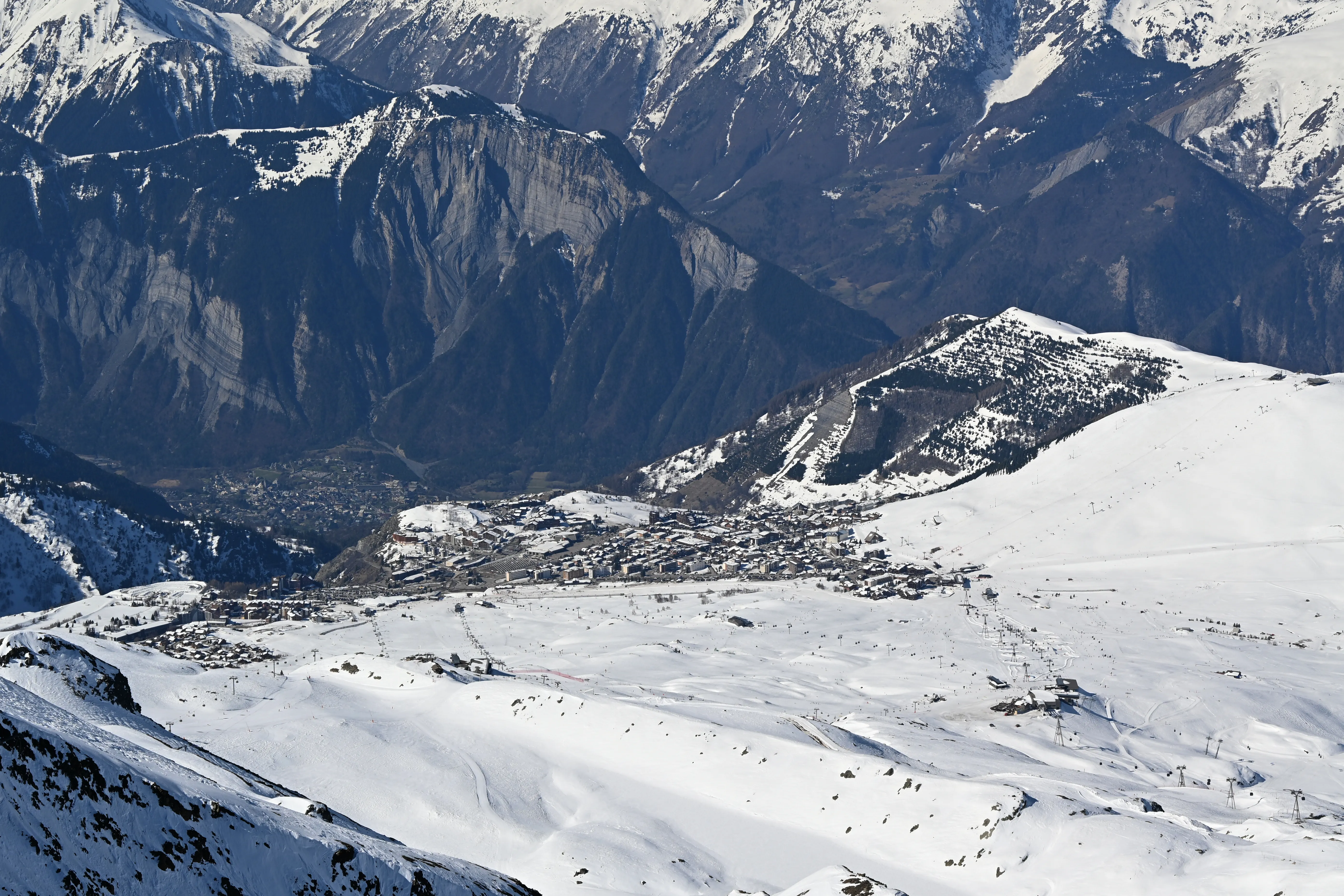
When you picture the 2030 Winter Olympics, you probably think of the big Savoie resorts. But an essential — and among the most spectacular — slice of the Games plays out further south, in the Hautes-Alpes, between Serre Chevalier, Montgenèvre and the citadel of Briançon. It’s the cluster we watch most closely from our chalet in Oz-en-Oisans, because it’s the only one genuinely within day-trip range of us. Here, event by event, is what this southern pole looks like — and how to experience it wisely, as a base camp, without sleeping on the venue or giving up your skiing.
The southern pole of the 2030 Games, in a nutshell
The 2030 Winter Olympics, delivered under the “Alps 2030” banner, run from 1 to 17 February 2030, followed by the Winter Paralympics from 1 to 10 March. The snow events split between two main geographic poles: Savoie and Haute-Savoie to the north (Val d’Isère, Courchevel, La Plagne, La Clusaz, Le Grand-Bornand) and the Briançonnais to the south, in the Hautes-Alpes. It’s this second pole that concerns us here. We laid out the full map, all clusters together, in our guide to the 2030 Olympic venues; this guide zooms in on the south.
The headline to grasp straight away: together, Serre Chevalier and Montgenèvre award about a third of the Games’ medals. In other words, the Briançonnais is no side venue — it’s one of these Olympics’ beating hearts, the one for freestyle (freestyle skiing, snowboarding) and ski mountaineering. Young, visual disciplines, made for photographs and for a wide audience. And since no event takes place in the Oisans, our position is easy to grasp: we’re not an Olympic site, but a credible rear base for experiencing this southern pole as a day trip.
Serre Chevalier: the temple of freestyle skiing
The cluster’s first stage: Serre Chevalier, the big resort of the Guisane valley, which hosts the freestyle skiing events at the heart of its domain, in La Salle-les-Alpes. Here you’ll find three of the most striking disciplines of the Games:
- Moguls (mogul skiing): an ultra-fast descent down a field of bumps, punctuated by two jumps, where speed vies with precision.
- Aerials: athletes launch off a kicker to string together twists and flips before a high-risk landing.
- Big air: a single giant jump, judged on amplitude and the difficulty of the tricks — the most “bucket list” discipline of the lot, spectacular even for a newcomer.
Serre Chevalier is no default choice: it’s a resort that has lived high-level skiing for decades, with high-altitude snow cover and slopes cut out for freestyle. For a spectator, it may well be one of the most readable venues on the programme: the action is concentrated, instantly legible, the atmosphere electric.
Good to know
The fine allocation of events between Serre Chevalier and Montgenèvre — and above all their schedules — will be set by the official calendar, published closer to the event. At this stage, take these assignments as a solid framework, but always check the programme and ticketing at the source before booking a specific day.
Montgenèvre: snowboarding, ski cross and ski mountaineering
Some thirty kilometres away, right by the Italian border, Montgenèvre — one of France’s oldest ski areas — takes the other big half of the freestyle and a major Olympic newcomer. The programme here is especially rich:
- Snowboarding in all its forms: halfpipe (tricks in the pipe), slopestyle (a course of features and jumps), snowboard cross (four to six riders racing the same track) and parallel giant slalom (alpine snowboarding, two courses side by side).
- Ski cross: the freestyle take on speed skiing, in head-to-head racing over a track of bumps, jumps and banked turns — one of the most breathless events of the Games.
- Ski mountaineering: now an Olympic discipline, with the sprint, the individual race and the mixed relay. Skinning up, skiing down: an endurance and mountain sport that fits the Briançonnais identity perfectly, and which even gains an extra event for 2030.
In short, Montgenèvre packs a programme as dense as it is varied. For a group, that’s often where the most “rewarding” event day is: several disciplines on a single site, short intense formats, and the warm atmosphere of a border resort.
The southern cluster at a glance
To find your bearings before choosing your excursion day, here are the two snow venues of the Briançonnais and what they host. Drive times are indicative from the Oisans, outside difficult winter conditions.
| Venue | Main events | From the Oisans |
|---|---|---|
| Serre Chevalier (La Salle-les-Alpes) | Freestyle skiing: moguls, aerials, big air | ~1 hr 15 – 1 hr 45 |
| Montgenèvre | Snowboard (halfpipe, slopestyle, cross, parallel slalom), ski cross, ski mountaineering | ~1 hr 30 – 2 hr |
| Briançon (Fort des Têtes) | Olympic village (athletes only) | ~1 hr 15 – 1 hr 45 |
You can see it plainly: from a chalet in the Oisans, the whole southern cluster fits within a day-trip radius. It’s exactly the logic we set out in our article on where to stay for the 2030 Olympics: don’t lodge on the saturated venue, but right beside it, in a valley that is itself a major ski domain.
The Fort des Têtes: an Olympic village in a Vauban citadel
You can’t talk about the southern cluster without its symbol: the Briançonnais Olympic village will occupy the Fort des Têtes (also called Fort des Trois-Têtes), the imposing fortification built to Vauban’s plans in the 18th century, perched at around 1,400 m and listed as UNESCO World Heritage. The idea: refurbish part of this historic site to house the athletes of the southern pole during the Games, then convert buildings into housing once the flame is out. A cable car linking the fort to Briançon’s town centre is also under study.
Let’s be transparent, as is our habit: this project is locally debated. Installing an Olympic village inside a listed monument, on a tight construction timetable, raises questions of public cost and heritage preservation, voiced by some residents. It’s not for us to settle that debate; we flag it because the information is out there and it’s better to know it. For planning your stay, the key takeaway is this: the fort will be an athletes’ site, closed to the public during the Games. You don’t “visit” an Olympic village — you go and watch the events, on the snow venues.
The classic trap
Around an event of this scale, ticket-sale dates, "official" accommodation prices and unconfirmed event calendars spread fast — and wrong. The 2030 Games setup is still evolving: never book an event day on the strength of unverified information. For ticketing, sign up for the official alerts; for accommodation, though, there's nothing to verify and everything to book — the larger properties sell out years ahead.
The Oisans as a rear base: geography works in your favour
Why experience this southern cluster from the Oisans rather than from Briançon? For one simple reason: the road. The Oisans and the Briançonnais are linked by the D1091, which crosses the Col du Lautaret (2,057 m, open all year). From Bourg-d’Oisans to Briançon, allow around 65 km, or 1 hr 15 to 1 hr 45 from Oz depending on winter conditions. It’s a fine mountain road, with a few hairpins and a magnificent view of the Écrins massif — not a motorway, but nothing insurmountable for anyone who sets off early and checks the pass weather the night before.
Let’s be honest, as always: in February, this drive calls for planning. From 1 November to 31 March, the Mountain Law requires suitable equipment (winter tyres, or chains/socks); in hard frost or snowfall, you’ll need margin and patience. It’s not a round trip you’d do three days running: it’s one excursion day, well prepared, once in the week. The rest of the time, you ski quietly at the end of your skis, in Oz. For everything about the routes into the valley, our guide to getting to Oz-en-Oisans covers the question.
The owners' tip
To take in a southern-cluster event without turning the week into a marathon, pick a single day and go for Montgenèvre: several disciplines run there, so more action for one drive. Set off early, check the Col du Lautaret conditions the evening before, pack the winter equipment, and leave a margin on the way back to enjoy the late-day light on the Écrins. The rest of the week, you ski the Grand Domaine a stone's throw from the chalet, and relive the day's events in front of the broadcasts. That's a well-planned rear base.
— Célia, Isabelle, Olivier & Wilfrid
Skiing the Grand Domaine while the Briançonnais buzzes
This is the argument people underrate the most. While Serre Chevalier and Montgenèvre live to the beat of the competitions — neutralised sectors, crowds, lifts mobilised, managed traffic — the Alpe d’Huez Grand Domaine will run at full tilt and with no event whatsoever: 250 km of pistes, the Pic Blanc at 3,330 m, the long Sarenne, all within gondola reach of Oz. You ski normally, on one of France’s largest domains, far from the saturated venues. Our guide to the Grand Domaine from Oz walks through the runs by level.
In practice, a well-planned Olympic week from the Oisans looks like this: four or five days of uncrowded skiing on the Grand Domaine, one excursion day out to the Briançonnais to watch an event as a spectator, and the evenings at the chalet in front of the broadcasts of the other competitions. You soak up the buzz of the Games without suffering its downsides — and never give up the skiing, which for most groups is the real reason for the trip.
For a group of 16, the whole-chalet logic really comes into its own here. One roof for the whole gang, a big table to relive the day’s events, seven bedrooms so everyone finds their own rhythm between a day on the slopes and a trip to a competition. And a budget kept in check where, in the host resorts, it will soar: from around €235 per person for an off-peak January week to about €437 per person in the heart of February, at 16 — when a Briançonnais hotel in an Olympic period is anything but reasonable.
★★★★★
"We dreamed of seeing Olympic freestyle for real, but without breaking the bank or sleeping in the middle of the crowd. A chalet in the Oisans, the Alpe d'Huez domain at the end of our skis, and the Briançonnais just over an hour away: we got our event day AND our week of skiing."
Planning your event day: the check-list
An excursion from the Oisans to the southern cluster is prepared the night before. Here’s the essential to make it a success rather than a slog.
- Pick a single day. One excursion to the Briançonnais is enough in the week; the rest is skied in Oz. No need to multiply round trips over the pass.
- Check the Col du Lautaret the night before. Weather, road status, mandatory equipment: in February, those three points decide everything. Set off early in the morning.
- Buy tickets from official sources. As soon as they go on sale, and nowhere else. Sign up for the ticketing alerts so you don't miss the opening.
- Anticipate on-site mobility. Mandatory shuttles, park-and-ride, filtered access: Olympic venues run on traffic plans. Allow margin on arrival and departure.
- Share out the cars. At 16, one or two cars are enough for the event day; those who'd rather ski stay in Oz.
This “base camp” calling is nothing new to the Games: it’s the very identity of Oz-en-Oisans, a resort-village linked to the Grand Domaine yet spared the bustle. The 2030 Games simply put it in the spotlight. And if you’re still torn on where to settle for the whole Olympic winter, our winter page gathers the essentials of the season.
In summary
The southern cluster of the 2030 Olympics is Serre Chevalier for freestyle skiing (moguls, aerials, big air), Montgenèvre for snowboarding, ski cross and ski mountaineering, and the Fort des Têtes in Briançon as the Olympic village — about a third of the Games’ medals, concentrated in the Hautes-Alpes. From the Oisans, all of it is within day-trip range over the Col du Lautaret, which opens an unbeatable strategy: ski an uncrowded big domain all week, and treat yourself to an event day whenever you fancy. All of it at a budget that stays human at 16.
The only thing that’s urgent is the booking: for February 2030, the larger properties will go years ahead. If you’re thinking of living the Olympic winter from a real family base camp, check our rates and availability and lock your week in early. To verify each detail at the source, the official Alps 2030 site and the venue master plan published by the IOC are authoritative for the map, the calendar and ticketing.
Frequently asked questions
Which 2030 Olympic events take place at Serre Chevalier?
Which 2030 Olympic events take place at Montgenèvre?
Where is the 2030 Olympic village in the Hautes-Alpes?
How many medals are decided in the Briançonnais at the 2030 Olympics?
How far is the Briançonnais from the Oisans for the 2030 Olympics?
Can you ski at Alpe d'Huez during the 2030 Olympics?
Is the Fort des Têtes in Briançon controversial?
Do you need tickets to watch an event at Serre Chevalier or Montgenèvre?
When should you book a chalet to experience the 2030 Olympics from the Oisans?
Is ski mountaineering really an Olympic sport in 2030?
Read next
 Tips
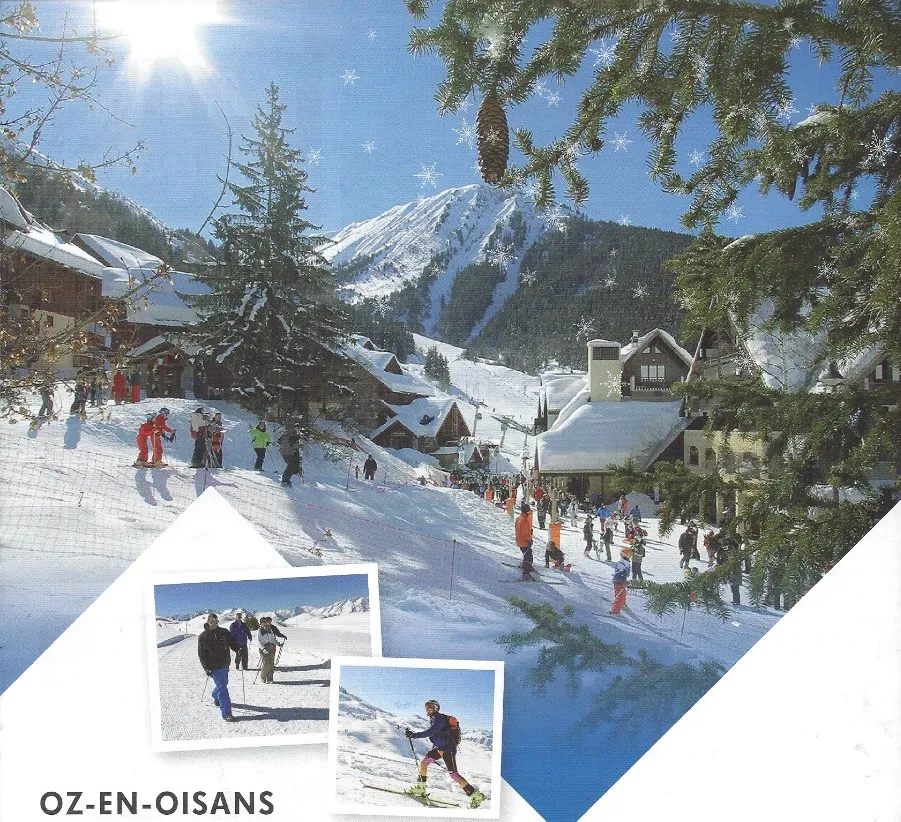
TipsSkiing in January off-peak: the smart move for groups
Empty slopes, prices cut almost in half and a wide-open chalet: why January outside the school holidays is the best ski week of the winter for a large group free to choose its dates.
Read more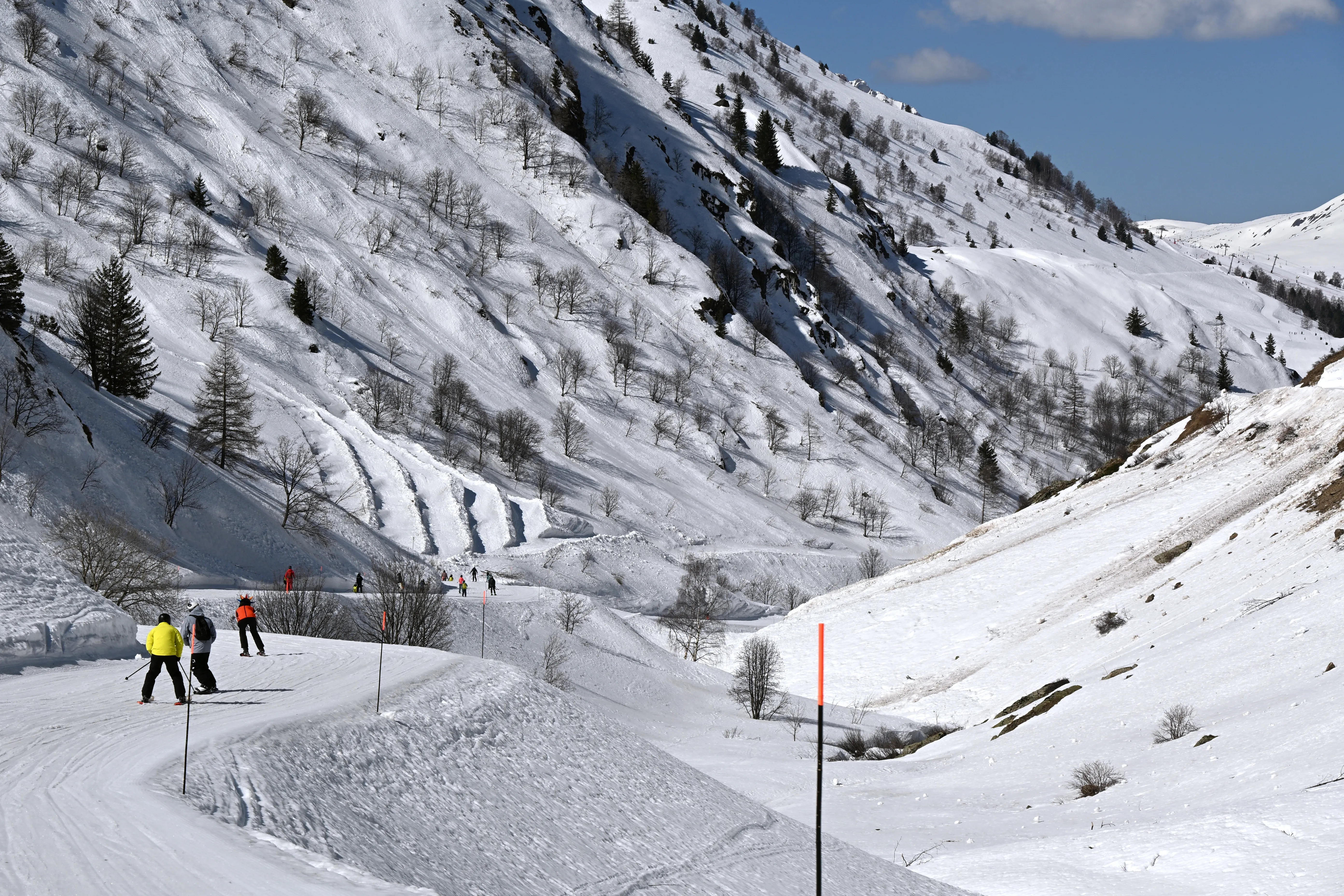 Tips
TipsSkiing during the 2030 Olympics: pick a quiet resort
In February 2030, while the host resorts of the Games are overrun, Alpe d'Huez will be running at full tilt with no events at all. The smart play: ski in peace and pop over to watch a competition for the day.
Read more Guide
GuideFebruary half-term in Alpe d'Huez: book early
French zone dates, peak-season prices, crowds and clever tips to ski smart: the complete guide to the February half-term at Alpe d'Huez, seen from the chalet in Oz.
Read more