
Tips · Winter
Skiing during the 2030 Olympics: pick a quiet resort
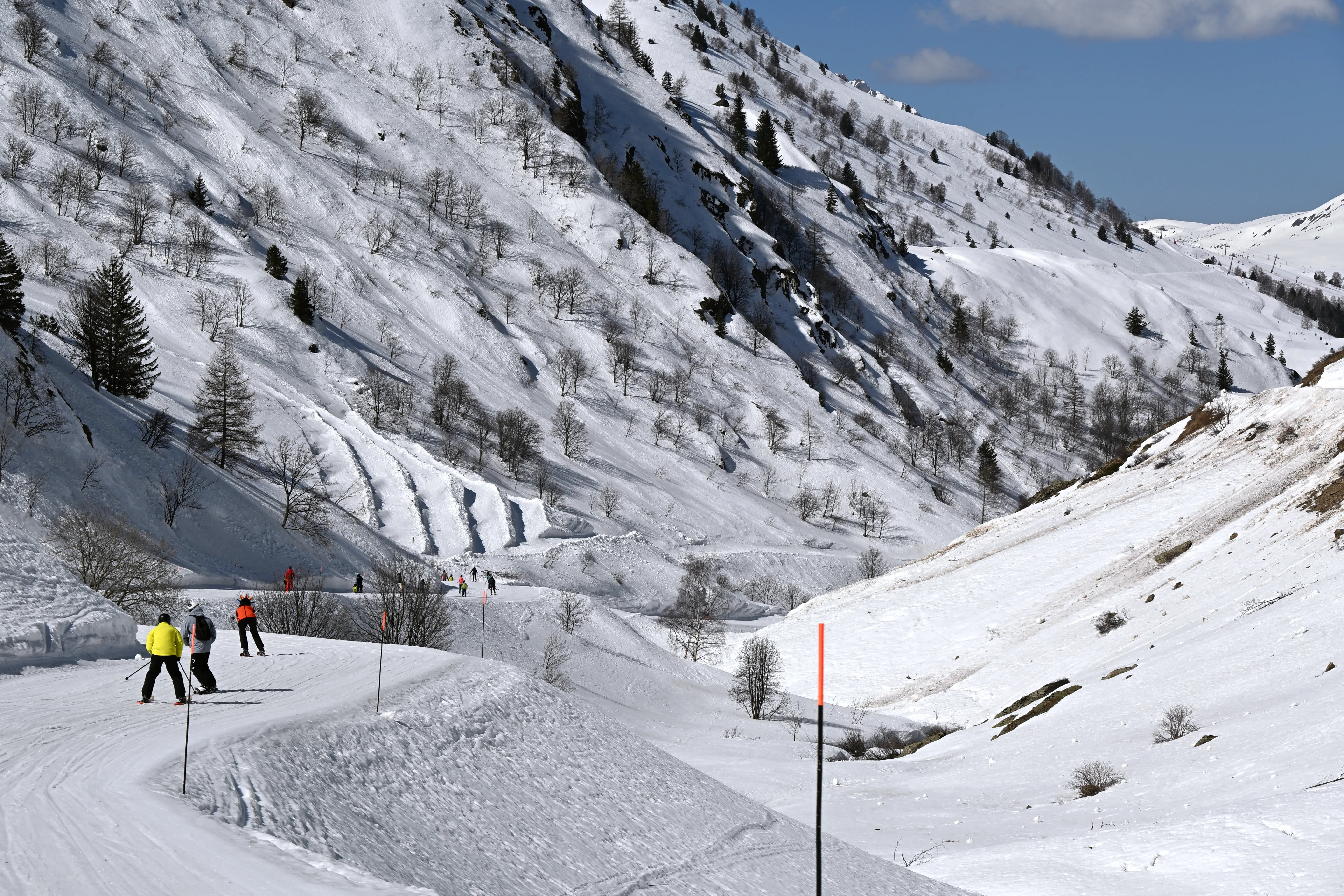
In February 2030, while the host resorts of the Games are overrun, Alpe d'Huez will be running at full tilt with no events at all. The smart play: ski in peace and pop over to watch a competition for the day.
9 October 2026 · 10 min

In 2030, the Winter Olympics return to the French Alps, from 1 to 17 February. For many sports fans, it’s the dream: to see an event live, soak up the Olympic atmosphere, say you were there. But there’s a trap, and it comes down to one word: February. An Olympic fortnight dropped onto the busiest week of the winter, in resorts that are already full, means prices going through the roof and crowded pistes wherever the events are held. We run a chalet in Oz-en-Oisans, a village resort linked to the Alpe d’Huez Grand Domaine that hosts no competition at all in 2030. And that, in our view, is precisely what makes it one of the best plays of the Olympic winter. Here’s why skiing in a non-host resort is, for a group, the smartest bet.
February 2030: Games dropped onto the busiest week of winter
Let’s set the scene plainly. The 2030 Winter Olympics, delivered by the “Alpes 2030” project, run from 1 to 17 February 2030, followed by the Paralympic Games from 1 to 10 March. The snow events are split across two main poles: Savoie and Haute-Savoie (Val d’Isère, Courchevel, La Plagne, La Clusaz, Le Grand-Bornand) and the Briançonnais, in the Hautes-Alpes (Serre Chevalier, Montgenèvre). The ice sports have been assigned to the Lyon metropolitan area. We lay out this map, event by event, in our guide to the 2030 Olympic venues.
The catch is the timing. February is already, in a normal year, the most sought-after period of the winter: staggered school holidays, families on the slopes, resorts at capacity. Add an Olympic edition, which turns the spotlight on the whole massif, and you get unprecedented demand in the host resorts. The Games are also built on restraint: no big new tourist village built for the occasion, and so no extra beds. The accommodation stock stays broadly what it is today, for demand multiplied several times over.
In practical terms, in a Briançonnais host resort in February 2030, three realities await you: scarce and expensive accommodation, booked months ahead; crowds around the venues; and controlled traffic through specific mobility plans (compulsory shuttles, park-and-ride, filtered access). That’s perfect for living the event to the full for a day or two. It’s far less appealing for settling in for a whole week with a group that also, and above all, wants to ski in peace.
The other strategy: sleep and ski where “nothing” is happening
What if the smart move were exactly the opposite of the first instinct? Rather than staying in the heart of the event, settle just next door, in a big resort that hosts no events and that will, itself, be running at full tilt. That’s the bet we make from Oz-en-Oisans.
Let’s be clear, as always: neither Alpe d’Huez nor Oz-en-Oisans hosts a single competition in 2030. We won’t sell you an “Olympic village” that doesn’t exist. But that’s exactly the point. While Serre Chevalier, Montgenèvre or Val d’Isère live to the rhythm of the events — sectors closed off for competition and training, lifts commandeered, crowds — the Alpe d’Huez Grand Domaine will ski normally: 250 km of pistes, the Pic Blanc at 3,330 m, the long Sarenne run, all within gondola reach from Oz. You ski on open terrain, on one of the largest ski areas in France, far from the saturated venues.
The owners' tip
Our favourite recipe for an Olympic week: four or five days of relaxed skiing on the Grand Domaine, one day out in the Briançonnais to watch an event as a spectator, and the evenings at the chalet in front of the other competitions. You taste the Olympic atmosphere when you want it, without enduring it from dawn to dusk. And the rest of the time, you enjoy what you really came for: skiing, together, in peace.
— Célia, Isabelle, Olivier & Wilfrid
The Briançonnais as a day trip: watch an event without sleeping there
The best part is that you don’t give up seeing the Games “for real”. From the Oisans, the Briançonnais cluster is within day-trip range. Allow about 1 hr 15 to 1 hr 45 from Oz to Serre Chevalier or Montgenèvre via the Col du Lautaret road (D1091, a 2,057 m pass open year-round), depending on winter conditions.
As for the events, the southern pole leans into freestyle skiing and snowboard — spectacular disciplines, ideal to watch from a spectator area. Around Serre Chevalier (La Salle-les-Alpes): moguls, aerials and big air. Around Montgenèvre: half-pipe, slopestyle, snowboard cross, ski cross, parallel giant slalom and ski mountaineering. The Olympic village will be set up at the Fort des Têtes, in Briançon. The precise event-by-event schedule hasn’t been published yet: it will be released later by the organising committee, and it’s on that official basis that you should plan a spectator day.
The mechanics are simple: you pick one or two events you fancy, you leave early in the morning, you experience the competition on site, then you head back to the chalet. The next day, off to the Alpe d’Huez slopes, with no crowds and no ticket. It’s the best of both worlds — the event when you want it, the quiet when you come home.
The classic pitfall
Don't take any event date, ticket price or traffic plan at face value until it's confirmed by official sources. Around an event of this scale, unverified information spreads fast. For tickets and the schedule, rely on the official Games channels; for accommodation, on the other hand, there's no reason to wait — the base camp can be booked today, direct and by contract. In February, also remember to check the Lautaret road status the day before — winter equipment is compulsory under the Loi Montagne from 1 November to 31 March.
The calculation that changes everything: the budget
This is the most concrete argument, and the most often underestimated. In a host resort, at the height of the Olympic period, accommodation prices will reach dizzying highs — it’s mechanical, as every recent edition has shown. In a non-host resort like Oz, by contrast, prices stay at the level of an ordinary February week.
For our 16-person chalet, that gives clear benchmarks: a peak-season February week rents for roughly €437 per person at 16, and an off-peak January week drops to around €235 per person. In both cases, it’s the whole-chalet principle at work: you divide the heaviest line — accommodation — by sixteen, where a resort hotel in the Olympic period multiplies it. To go further, our detailed budget for a ski week for 16 costs out every line, lift passes and groceries included.
Good to know
February 2030 will overlap the French winter holidays, split across zones A, B and C. The official 2029-2030 calendar hasn't been published yet: it will be available on the French Ministry of Education website. Depending on the zone and the week, crowds and prices vary — and the overlap with the Games will make some weeks especially busy. If your group has some flexibility on dates, a week on the edge of the school-holiday period can make a real difference to both the budget and the crowds.
This base camp vocation is nothing unusual: it’s the very identity of Oz-en-Oisans, a village resort linked to the ski area but shielded from the bustle. The 2030 Games simply put it in the spotlight. If you’re genuinely set on the Olympic winter, our guide to where to stay for the 2030 Olympics compares every accommodation option, and our Briançonnais Olympic guide breaks down the southern pole, event by event, to help you plan your spectator day.
★★★★★
"We dreamed of seeing an Olympic event, but not of sleeping in the crowd or paying triple the price. A chalet in the Oisans, the Alpe d'Huez ski area at the end of our skis, and a day trip over to the Hautes-Alpes for the competition: we got the atmosphere and the peace and quiet."
An ideal Olympic week from Oz, day by day
To make it concrete, here’s what a week planned from the chalet could look like during the fortnight — to be adjusted, of course, to the official event schedule once it’s published.
- Saturday — Arrival and settling in. Drop the bags, shop down in the valley, sort out the bedrooms. First evening at the chalet, opening ceremony on TV.
- Sunday to Tuesday — Relaxed skiing. Three days on the open Grand Domaine: Pic Blanc, Sarenne, the Oz-Vaujany sectors. In the evening, follow the day's events from the living room.
- Wednesday — Olympic day. Early start over to the Briançonnais via the Lautaret for a freestyle or snowboard event. Back by late afternoon, celebratory dinner at the chalet.
- Thursday — Recovery and a lie-in. Ease off: a half-day of skiing, sledging, or simply the sunny balcony facing Belledonne.
- Friday — Big ski day. One last big day across the 250 km, then a final evening in front of the competitions.
- Saturday — Departure. A relaxed check-out, a head full of memories, and not a euro wasted on an overpriced hotel room.
Nothing forces you to go and watch an event, either. Some groups will prefer to ski every day and make do with the evening broadcasts — a very pleasant “Olympic lounge” feel when there are sixteen of you under one roof, with the big table for rehashing the races and debating the medals. Others will go and watch two or three competitions. The base-camp formula leaves everyone free to set their own programme, without depending on a shuttle or an access plan.
Why a whole chalet rather than scattered rooms
For a group of 8, 12 or 16, the whole-chalet logic really comes into its own here. One roof for the whole gang, seven bedrooms so everyone finds their own rhythm between a day on the slopes and a trip out to an event, a big table for the evenings. And a fast fibre connection to follow the competitions live without buffering when the whole tribe is watching the same race.
In Oz, the chalet is 50 metres from a ski lift and a few minutes from the gondolas that climb to the heart of the ski area: you ski car-free most of the time, and one or two cars are enough for the group to run the trips to the Briançonnais. That’s exactly what you want from a base camp: close to everything that matters, far from everything that tires you out. If you’re still weighing up the resort, our comparison of Oz-en-Oisans or Alpe d’Huez will help you choose your base.
Book early: the real race against the clock
There’s one event that starts well before February 2030: finding somewhere to stay. And that’s the one to take seriously right now. The biggest properties — group chalets, family residences — are the first to go, and the Olympic effect only accelerates the rush, including in non-host resorts, because the base-camp strategy will appeal to more and more people as 2030 approaches.
- Lock in the week from 2029. For a group chalet aimed at February 2030, don't delay: the early birds choose the week, the rest take what's left.
- Book accommodation before tickets. Without a roof, the best ticket is useless, and accommodation books up well before tickets go on sale.
- Keep some flexibility on dates. A week on the edge of the school holidays eases both the crowds and the budget.
- Decide on car logistics. One or two cars are enough for the group to cover a trip out to an event, with the rest of the week lived ski-in ski-out from Oz.
- Follow the official schedule. Plan your spectator day once the event programme is published by the organisers — never before.
In short
Living the 2030 Olympics (1–17 February) doesn’t have to mean sleeping in the crush and paying top dollar. The smartest strategy, for a group that wants to ski above all, is to set up camp in a non-host resort like Alpe d’Huez / Oz-en-Oisans: a 100% open and uncrowded Grand Domaine, the Briançonnais cluster within day-trip range to go and watch a competition, and the evenings at the chalet in front of the broadcasts. You get the Olympic atmosphere without its downsides — and the budget stays human at 16.
The only thing that’s urgent is the booking. If you’re thinking of living the Olympic winter from a genuine family base camp, check our rates and availability and lock in your week early. To verify every detail at the source, the official Alpes 2030 site and the venue master plan published by the IOC are the authority for the map, the schedule and tickets. Our winter page also pulls together the essentials of the season.
Frequently asked questions
Can you still ski normally during the 2030 Winter Olympics?
Will the 2030 Olympic host resorts be crowded?
Which resorts host no 2030 Olympic events?
Can you go and watch a 2030 Olympic event from Alpe d'Huez or Oz?
How long does it take to reach the Briançonnais from the Oisans in February?
Which events will you be able to watch in the Briançonnais in 2030?
Does February 2030 fall during the school holidays?
When should you book a chalet to ski during the 2030 Olympics?
How much does a ski week for 16 cost during the 2030 Olympics?
Is it better to watch the Games live or follow them from the chalet?
Read next
 Tips
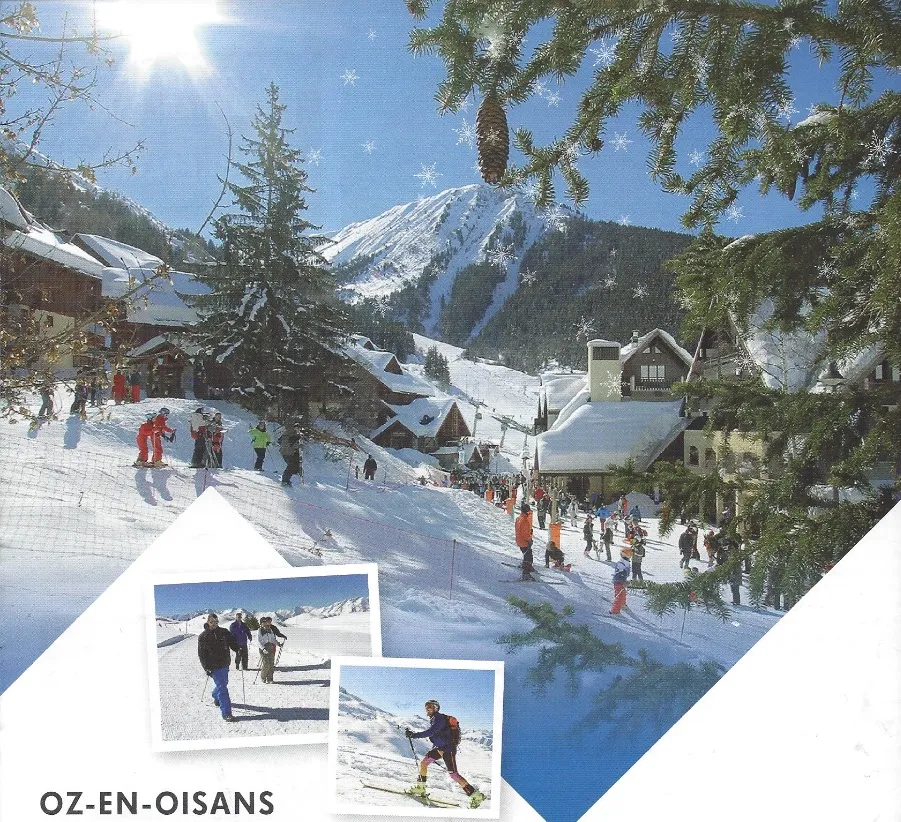
Skiing in January off-peak: the smart move for groups
Empty slopes, prices cut almost in half and a wide-open chalet: why January outside the school holidays is the best ski week of the winter for a large group free to choose its dates.
Read more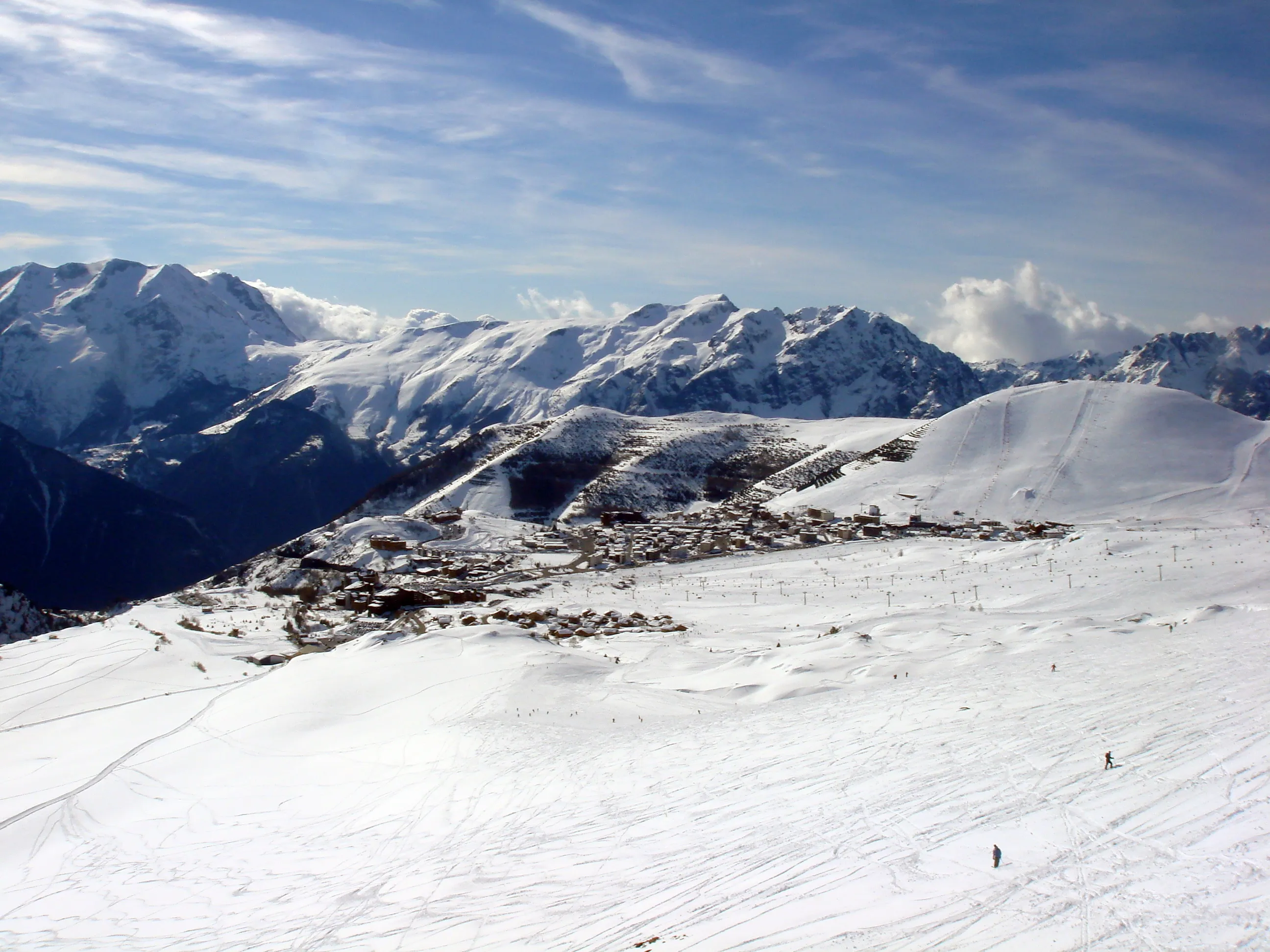 Guide
February half-term in Alpe d'Huez: book early
French zone dates, peak-season prices, crowds and clever tips to ski smart: the complete guide to the February half-term at Alpe d'Huez, seen from the chalet in Oz.
Read moreEventChristmas and New Year in Alpe d'Huez and Oz: what's on
Torchlit descents, Santa Claus, midnight fireworks, ice rink, night sledging: the guide to Christmas and New Year events in Alpe d'Huez and Oz-en-Oisans, and how to enjoy them from the chalet.
Read more