
Guide · Summer
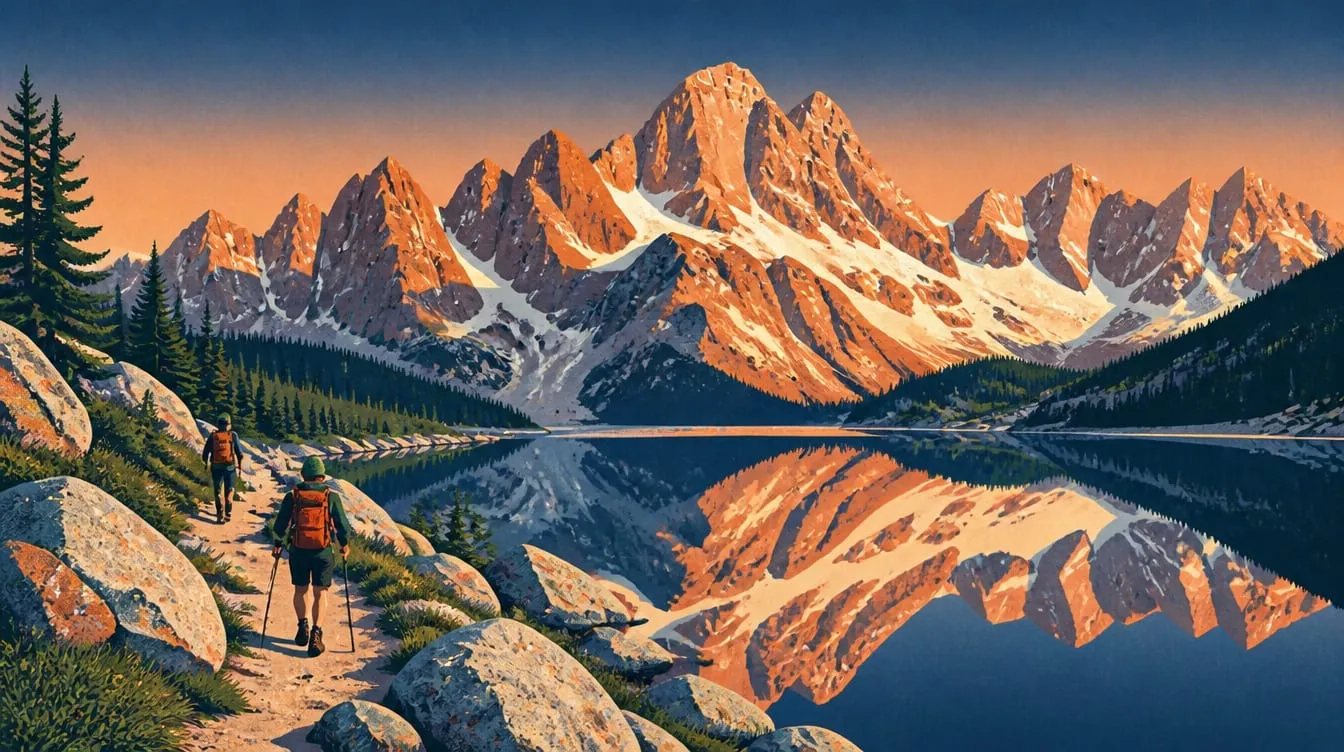
Alpe d'Huez lakes: Besson, Noir, Blanc hikes from Oz
The Alpe d'Huez lake plateau — Besson, Rond, Noir, Faucille, Carrelet — makes an easy family loop at 2,100 m. Our guide to the gentle hikes from Oz, plus the higher Lac Blanc des Grandes Rousses for stronger legs.
7 July 2026 · 10 min
Some hikes have to be earned; others reward you from the very first step. The Alpe d’Huez lake loop belongs firmly to the second kind: at 2,100 metres, on the Petites Rousses plateau, a handful of high-altitude lakes — Besson, Rond, Noir, Faucille, Carrelet — are linked by an almost-flat path, among rhododendrons, bilberries and marmots. You go as a family, in trail shoes and swimwear for wading rather than swimming, with a picnic in the pack and the Grandes Rousses as a backdrop. From our chalet in Oz-en-Oisans, it’s one of the summer outings we recommend most often: easy, spectacular, and reachable without a car. And for those craving more altitude, the Lac Blanc in the Grandes Rousses waits a notch higher. Here’s the complete guide.
The lake plateau: a high balcony above Oz
Above the last lifts of Alpe d’Huez and Oz-en-Oisans spreads a vast plateau the maps call the Petites Rousses, or the Alpette plateau. It’s a world apart: very few trees, sweeps of bilberry and rhododendron, spongy peat bogs, and that particular light you only find at 2,000 metres. Nestled in this landscape, a series of lakes follow one another, each with its own colour and mood.
The best known is Lac Besson, at 2,080 metres. Right beside it, Lac Rond almost joins it. A little further on, Lac Noir, Lac Faucille and Lac Carrelet punctuate the walk; some add the small Lac Lamat. Together they form an ideal playground for a gentle morning’s walking, with panoramas that take in the Belledonne massif, the Taillefer, the distant Écrins and, close at hand, the mineral crests of the Grandes Rousses.
What makes this plateau so precious is exactly that rare combination: altitude and big landscapes, but gentle, almost horizontal terrain that children cover without a struggle. You’re not here to suffer; you’re here to open your eyes wide.
The lake loop: easy, family-friendly, spectacular
The star hike is the lake loop. Count on about 6.5 km for just 150 metres of ascent, roughly 2h30 of walking at a family pace, stops aside. The path is well marked, rolling, and presents no technical difficulty: it’s one of the most accessible hikes in the whole area.
You thread the lakes like beads on a string: a stretch of water, a gentle rise of a few metres, a flat, another lake. At every bend the scenery shifts. The shores move from peat bogs to scree, from carpets of rhododendron (superb in June–July) to expanses of bilberry that redden in autumn. It’s a hike done as much with the feet as with the camera.
The owners' tip
Set off early. At 2,100 m, afternoon storms are common in summer, and marmots are far more visible before 10am and late in the day. Our routine with a big group: breakfast at the chalet, up in the morning, the lake loop and a picnic beside Lac Besson, then back for a quiet afternoon on the terrace. Pack a light layer even in July: the altitude wind cools things down the moment a cloud passes.
— Célia, Isabelle, Olivier & Wilfrid
Getting up to the lakes from Oz: on foot or by gondola
Oz-en-Oisans’ great advantage is that the lake plateau sits at the top of the resort’s gondolas. Two ways to reach it:
- On foot from Oz. The resort trails climb steadily towards the plateau. This is the sporty version: a fine warm-up, but with real ascent to swallow. Ideal for trained walkers who want to gain the altitude under their own steam.
- By gondola. From Oz, the Alpette gondola drops you closest to the plateau. You then do the lake loop in discovery mode, without the bulk of the climb, and come back down by a lift or the trails. It's the go-to formula for a family outing or with occasional walkers.
- The clever combination. Ride a gondola up, do the loop, and walk down (or the reverse): about 5.5 km, 100 m of ascent and 1h30 of walking if you link the Alpette and Poutran. You enjoy the altitude without wearing yourself out, and the walk down opens up other viewpoints.
Good to know
Not all summer gondolas open, nor for the whole summer, and some close temporarily for works. The Poutran gondola, for instance, may be closed for renovation depending on the season. Before counting on a specific lift, check its opening and current timetable on the Oz-en-Oisans tourist office website. To reach Oz from the valley stress-free, also consider the Eau d'Olle Express gondola from Allemond.
Swimming, marmots, flowers: what you really come for
Let’s be honest: you don’t come here to swim. These lakes are neither managed nor supervised, the water stays icy even in high summer, and above all they are fragile natural sites — peat bogs, high-altitude wildlife and flora — that must be protected. You admire them, you might dip your feet at the edge where the signs allow, but the idea of a real swim is best kept for the valley lakes, like the Verney reservoir at Allemond.
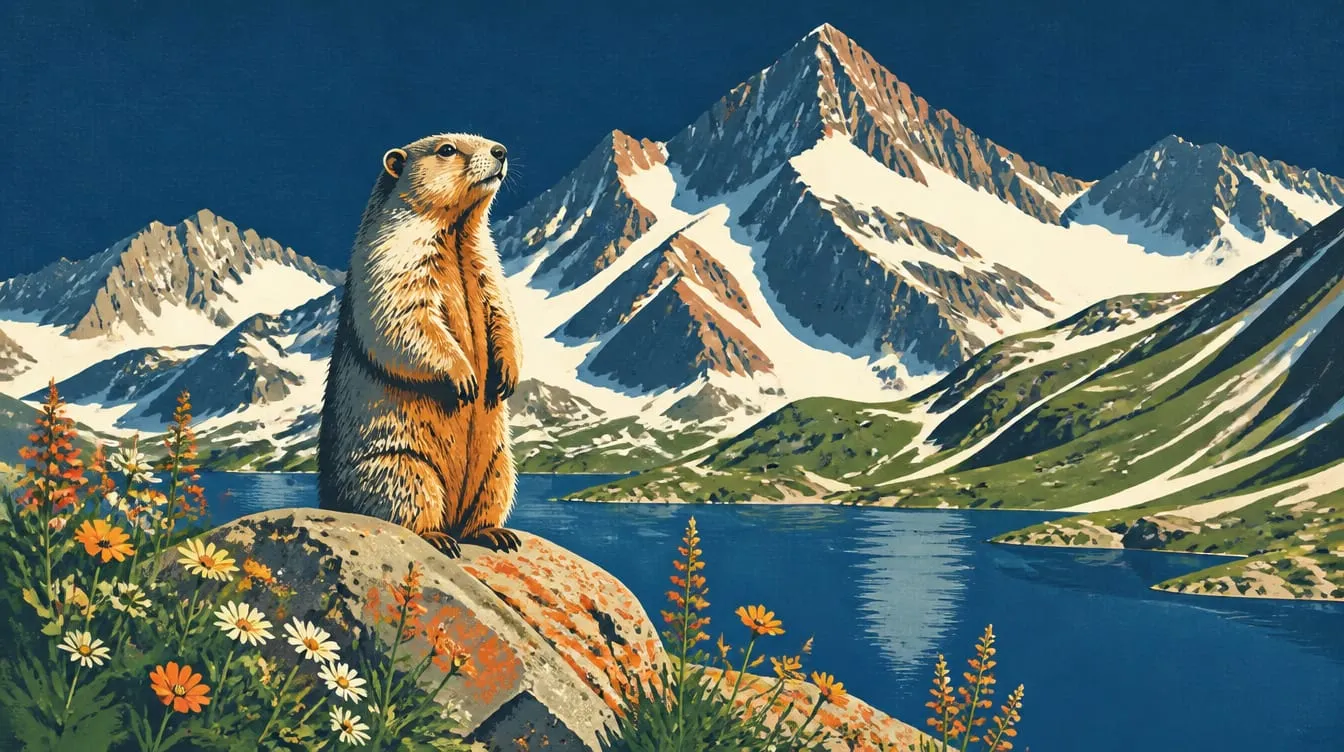
What you do come for is in no short supply. The marmots, first: they populate the grassy slopes and can be watched with a little patience, especially in the morning. The flora next: blazing rhododendrons in early summer, bilberries, cottongrass in the peat bogs, gentians. And finally the panoramas, turning a full 360° over the great massifs of the Oisans. It’s a hike of observation and contemplation, where you move slowly and stop often.
- Walking shoes: the path is easy but the ground stays mountainous (stones, damp sections near the bogs).
- Water and a picnic: there are no shops on the plateau, so carry everything.
- Sun cream and sunglasses: at 2,100 m the sun is fierce, even on a hazy day.
- A light layer and a windproof: mountain weather turns quickly.
- Binoculars: for the marmots and chamois higher up.
Lac Blanc in the Grandes Rousses: the altitude option
Don’t get the two confused: the Lac Blanc in the Grandes Rousses is nothing like a plateau stroll. It sits much higher, around 2,700 metres, in a mineral, glacial setting at the foot of the Pic Blanc (3,330 m) and its glacier. Here there are no more bilberries or rhododendrons: rock, snowfields, a raw light and vast silences.
You reach it mainly by the Pic Blanc gondola (the former DMC of the Grandes Rousses) from Alpe d’Huez, which hauls you up into the top of the ski area. From there, routes lead to the Col du Lac Blanc (around 2,800 m) and open onto striking views of the lake, the Sarenne glacier and the surrounding peaks. It’s a more alpine outing: rough terrain, high altitude, weather to watch closely. Nothing out of reach for a fit walker, but you wouldn’t take it on with young children the way you’d do the Lac Besson loop.
The classic trap
Confusing the two "easy lakes" with Lac Blanc. The Besson–Noir–Carrelet loop is a family stroll at 2,100 m; Lac Blanc in the Grandes Rousses is a high-altitude outing at 2,700 m, on mineral terrain, dependent on a gondola and the weather. Find out the real grade before you go, dress accordingly, and check the lifts are running: at that altitude, a storm or a gust must be taken very seriously.
A typical lake day, chalet-style
Here’s what a fine “lake” day looks like when you’re staying in Oz. In the morning, a relaxed breakfast at the chalet, then up you go — on foot for the sporty ones, by gondola for the rest of the party. You all meet on the plateau, do the lake loop at your own pace, and picnic by the water while watching for marmots. Early afternoon, back down. And there, everyone finds the terrace, a nap, or a valley swim for the bravest.
That’s exactly what a big chalet allows: set off together in the morning, split by wishes and fitness through the day, and reunite in the evening around one large table. The walkers tell of marmots, the others enjoyed the village, and everyone dines together. To plan other summer outings, take a look at our guide to things to do in Alpe d’Huez in summer and our summer in Oz-en-Oisans page.
Planning your lake outing well
A few pointers to make the day a success. The season first: the plateau is best discovered from June to September, once the snow has melted, with trails maintained roughly from 1 June to 30 September. Early in the season, a few snowfields can linger near the highest lakes.
Access next. From Oz, aim for the Alpette gondola to get close to the plateau; from Alpe d’Huez, you can also reach the lakes on foot from the end of the lakes road. The hike itself is free and open: you only pay for the lift if you use one, via a pedestrian ticket or a hiking pass. Fares change every summer, as do the gondolas’ timetables and opening dates: the only reliable source is the tourist office.
★★★★★
"We did the lake loop with the kids, 6 and 9, without any difficulty. Marmots right beside the path, turquoise water, mountains all around: a huge memory for a tiny effort. We came back to lunch at the chalet — perfect."
Finally, a word on respecting the place. These lakes and their peat bogs are fragile ecosystems: stay on the trails, don’t pick anything, don’t feed the marmots, take your litter home. It’s a tiny price to keep these landscapes just as beautiful for those who come after. To place Oz in its setting and discover the area’s other riches, our full review of the Oz-en-Oisans resort and the Oisans region page give an overview.
Sources and practical information
To plan your visit with up-to-date information (gondola opening, timetables, pedestrian fares and hiking passes), rely on the official sites: the Oz-en-Oisans tourist office for the climb from the resort, and the Alpe d’Huez tourist office for the upper lakes and the high-altitude hikes towards Lac Blanc.
The Alpe d’Huez lakes are one of those experiences that make you love the mountains in summer: little effort, plenty of beauty, and that feeling of being on top of the world a few minutes from the chalet. Whether you aim for the easy Lac Besson loop with the family or the wilder climb to Lac Blanc, Oz-en-Oisans is the ideal starting point.
Fancy making it your base camp? Discover Ozalp’ Cottage and our rates and availability: we’ll call you back to organise everything, outings included.
Frequently asked questions
Where are the Alpe d'Huez lakes?
Is the lake loop easy for children?
How do you get up to the lakes from Oz-en-Oisans?
Can you swim in Lac Besson or Lac Noir?
Will we see marmots around the lakes?
What's the difference between Lac Besson and Lac Blanc?
When are the Alpe d'Huez lakes accessible?
Do you need a ski pass or pay to hike to the lakes?
How long should we allow for a family outing to the lakes?
Can you do the lakes by mountain bike or trail running?
Where should you stay to hike the Alpe d'Huez lakes?
Read next
 Tips
TipsSkiing in January off-peak: the smart move for groups
Empty slopes, prices cut almost in half and a wide-open chalet: why January outside the school holidays is the best ski week of the winter for a large group free to choose its dates.
Read more Tips
TipsSkiing during the 2030 Olympics: pick a quiet resort
In February 2030, while the host resorts of the Games are overrun, Alpe d'Huez will be running at full tilt with no events at all. The smart play: ski in peace and pop over to watch a competition for the day.
Read more Guide
GuideFebruary half-term in Alpe d'Huez: book early
French zone dates, peak-season prices, crowds and clever tips to ski smart: the complete guide to the February half-term at Alpe d'Huez, seen from the chalet in Oz.
Read more