
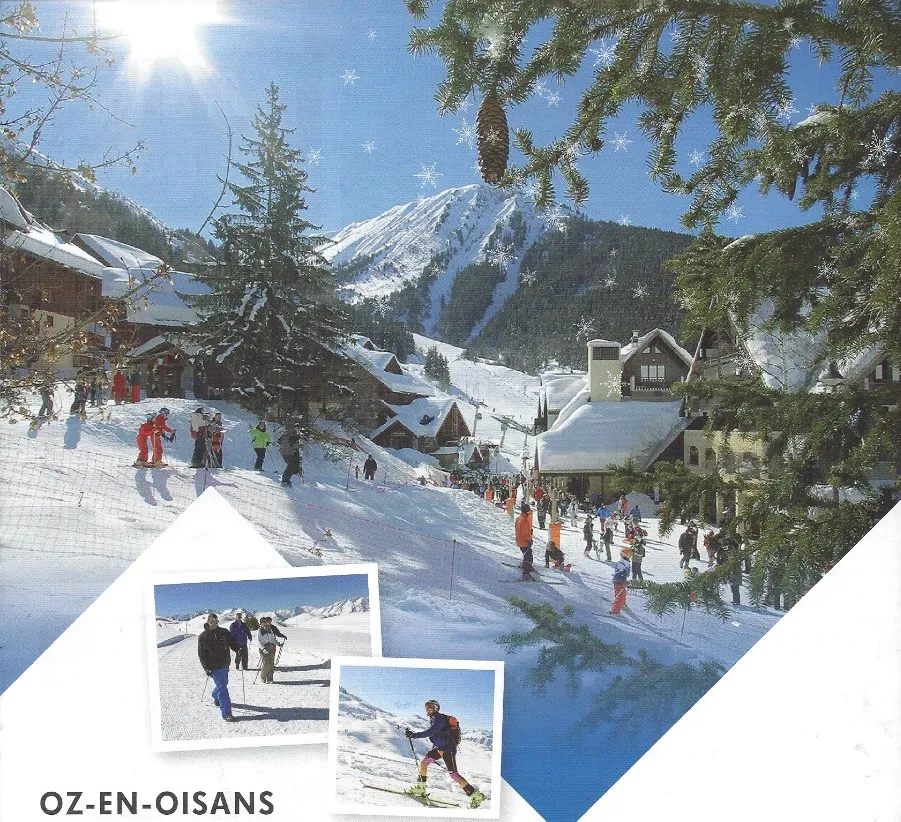
Guide · Winter
Oz-en-Oisans, snow and altitude: what to know
A village at 1,350 m, a ski area up to 3,330 m: here's the honest truth about the snow in Oz-en-Oisans, and why the village's 'low' altitude is not a problem.
14 August 2026 · 10 min
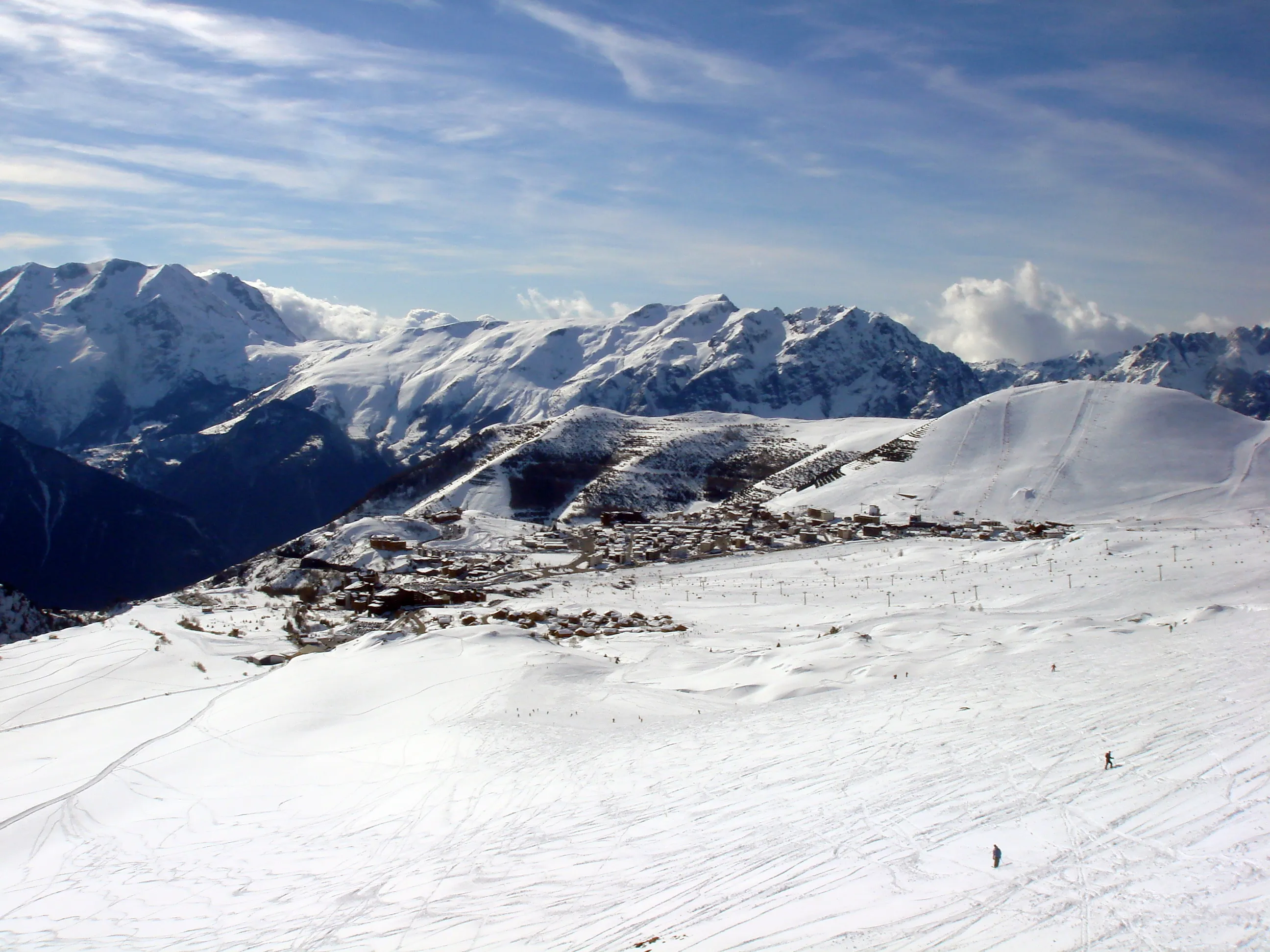
It’s probably the question we’re asked most before a winter booking: “Oz-en-Oisans is at 1,350 m… are you sure there’ll be snow?” It’s a fair question, and we’d rather answer it straight than sell you a postcard. Yes, the village of Oz is lower than the resort of Alpe d’Huez. No, that’s not a problem for skiing — and we’re going to explain exactly why. Because in Oz, you don’t ski at chalet level: you take a gondola that drops you, within minutes, into an area that climbs to 3,330 m, glacier included. Here’s our honest guide to altitude and snow in Oz-en-Oisans, so you can book with peace of mind.
The starting objection: “1,350 m is low”
Let’s be direct. Oz-en-Oisans is a village resort at 1,350 m, while the resort of Alpe d’Huez sits at around 1,860 m. On paper, those five hundred metres can worry you: all else equal, a higher resort holds snow better — that’s a mountain rule. Many holidaymakers stop at that number and cross Oz off their list. That’s a mistake, and here’s why.
The figure that matters isn’t the altitude of the village, but that of the ski area you’ll actually use. And from Oz, you almost never ski at 1,350 m: two gondolas — Poutran and Alpette — take you within minutes into the heart of the area, around 2,000 m, from where the entire Alpe d’Huez Grand Domaine opens up, between 1,850 and 3,330 m. In other words, the village’s “low” altitude tells you nothing about the snow under your skis.
Good to know
In Oz, the village is your base camp, not your main ski terrain. In the morning you walk to the snow front, ride the gondola up, and spend the day between 2,000 and 3,330 m. The snow that matters for your stay is up there — not on the village square.
What keeps the snow reliable: the area’s altitude and the glacier
From Oz you access the Alpe d’Huez Grand Domaine, one of the highest ski areas in the French Alps. Its high point, the Pic Blanc, reaches 3,330 m. At that altitude, snow is almost always there, from the start to the end of the season. Better still: the area has the Sarenne glacier, which lets you ski above 3,000 m on high-altitude snow. It’s this verticality — from glacier to village — that built Alpe d’Huez’s snow reputation, and Oz enjoys it fully, because it’s the very same area.
That height translates into reliable snow from December to April across most high sectors. The famous Sarenne, the longest marked black run in Europe at 16 km, drops from the Pic Blanc at 3,330 m down toward the Sarenne gorges: nearly 1,820 m of vertical on snow that holds — one of the clearest markers of the area’s altitude. We cover all of it in our guide to the Alpe d’Huez Grand Domaine from Oz.
The owners' tip
Never read a snow report by the "bottom of the resort" figure alone. Look at the depth at the summit and mid-mountain: that's where you'll ski 90% of the time from Oz. A winter with "little snow in the village" can still deliver excellent skiing up high — it's actually common early and late in the season.
— Célia, Isabelle, Olivier & Wilfrid
Oz’s real strength: snow that holds down low
Here’s the point few people know, which completely flips the opening objection. The Oz sector is largely forested and sheltered. Unlike the Alpe d’Huez snow front — nicknamed “the sunny island” for its generous exposure — the return pistes to Oz drop through the firs, on slopes less hammered by the sun. The result: snow often holds better and longer there than on the south-facing pitches, exactly where you’d least expect it given the village’s altitude.
Add to that snowmaking. The Grand Domaine is fitted with several hundred snow cannons — around 900 across the whole area — concentrated on strategic pistes and, above all, on the resort return links. It’s this network that lets Oz guarantee the ski-back all season, even when natural snow gets patchy. The “sheltered forest + cannons” combination makes the return to Oz one of the most reliable in the sector.
The ski-back: what really happens by period
Since the underlying question is “will I be able to ski all the way back to the chalet?”, let’s be precise, period by period. In peak season (mid-December to late March), skiing right back to Oz is the norm: the link pistes are covered, naturally or by the cannons, and you cruise down from the area to the village.
Early season (December) and late season (April), or during a marked thaw mid-winter, the lower slopes can soften in the afternoon. In those cases, snowmaking takes over on the returns, and if the bottom link really isn’t ideal, the gondola handles the descent: you’re never stranded up top. That’s the safety net of a resort linked to a large high-altitude area — a luxury small mid-mountain resorts simply don’t have.
The classic trap
The mistake, in April especially, is insisting on skiing back at the very end of the day on lower-slope snow gone heavy and slushy. Ski the bottom in the morning, when it's firm, and favour the big high sectors in the afternoon. Worst case, take the gondola for the last descent: that's not a failure, it's spring common sense.
When to come, by profile
Not all winter weeks are equal, depending on what you’re after. Here’s our honest read of the snow across the season, to time your stay.
| Period | Snow & area | Best for |
|---|---|---|
| December (pre-Christmas) | Gradual opening, high altitude reliable, bottom sometimes thin | Skiers wanting quiet and gentle prices |
| Christmas holidays | Area well open, festive buzz | Families and groups after the holiday spirit |
| January off-peak | Frequent fresh snow, empty pistes | The best snow/price/quiet ratio |
| February half-term | Maximum cover, everything open | Families with school-age children |
| March | Lovely days, snow still good up high | Confident skiers, sun lovers |
| April (late season) | Excellent up high, heavy down low in the afternoon | Spring skiing, glacier and big verticals |
Our tip for a large group: aim for January off-peak or March. You get an uncrowded area, noticeably softer prices, and high-altitude snow that’s always there. If you’re travelling with school-age children, February stays the safe bet for snow cover, at the cost of higher crowds and prices. To weigh the two resorts by style, read our comparison Oz-en-Oisans or Alpe d’Huez.
Snowmaking, cross-country and high altitude: the full picture
Beyond alpine skiing, Oz’s altitude serves other snow pleasures too. The local cross-country area sits above 2,050 m, making it one of the highest Nordic domains in the Alps — and therefore one of the best-covered, often all winter. For families, a beginner zone and a snow garden at the front, fed by snowmaking, guarantee usable learning terrain even after a dry spell.
Finally, remember that snow figures shift from season to season, and a report is always read by cross-checking several altitudes (bottom, middle, summit). Before you leave, a glance at the official report and the resort webcams beats any forecast.
What really reassures you, with a chalet in Oz, is knowing you have a quiet base camp linked to a high-altitude area. You ski high during the day and come home warm in the evening to a car-free village resort where the snow falls between the firs. To organise all of that for 16, our guide to renting a chalet for 16 in the Alps walks through group logistics, and our full review of the Oz-en-Oisans resort tells you everything we love — and love less — about it.
★★★★★
"We'd hesitated because of the village altitude. We were wrong to doubt: we were skiing at 3,000 m in the morning on perfect snow, and skiing back to the chalet in the evening through the firs. Genuinely blown away by the March conditions."
Our honest take on snow in Oz
We won’t pretend Oz-en-Oisans is the highest resort in the Alps: it isn’t, and the village at 1,350 m calls, as everywhere in mid-mountain terrain, for a little clear-headedness about the lower slopes at the very start and end of the season. A December short on natural snow shows first down low, and an April afternoon turns the return snow to slush. That’s the honest reality, the same for every resort whose base sits around 1,300–1,400 m.
But the balance tips firmly the right way. You ski a high-altitude area that climbs to 3,330 m, with a glacier, reliable snow from December to April, sheltered forest returns that hold snow, and a snow-cannon network that guarantees the ski-back all season. The village’s “low” altitude isn’t a snow flaw: it’s simply the price of a warm, wooded, wind-sheltered village resort — the kind of place you actually want to come home to. For a season overview at a glance, our winter page gathers the essentials.
Ready to come and check the snow for yourself? See our rates and availability. And for the figures at source, the Oz-en-Oisans tourist office and the Alpe d’Huez resort publish opening dates, snow reports and the updated piste map every season.
Frequently asked questions
How high is Oz-en-Oisans?
How high does the ski area go from Oz?
Does snow hold well in Oz despite the village's altitude?
Can you always ski back down to Oz-en-Oisans?
When does the Oz-en-Oisans ski area open and close?
Is there snowmaking in Oz and across the Grand Domaine?
Is Oz-en-Oisans a good resort late in the season?
Should you pick Alpe d'Huez over Oz to be sure of snow?
Is the Oz sector good for beginners in terms of snow?
Is the aspect of Oz-en-Oisans good for snow?
Read next
TipsSkiing in January off-peak: the smart move for groups
Empty slopes, prices cut almost in half and a wide-open chalet: why January outside the school holidays is the best ski week of the winter for a large group free to choose its dates.
Read more Tips
TipsSkiing during the 2030 Olympics: pick a quiet resort
In February 2030, while the host resorts of the Games are overrun, Alpe d'Huez will be running at full tilt with no events at all. The smart play: ski in peace and pop over to watch a competition for the day.
Read moreGuideFebruary half-term in Alpe d'Huez: book early
French zone dates, peak-season prices, crowds and clever tips to ski smart: the complete guide to the February half-term at Alpe d'Huez, seen from the chalet in Oz.
Read more