
Tips · Winter
Working remotely from a mountain chalet: the guide
Fibre at 889 Mbps, seven bedrooms to take calls in peace, ski in the morning and work in the afternoon: how to nail a workation week in the mountains — with family, friends or your team.
18 September 2026 · 10 min

Working with the peaks in front of you rather than an office wall, wrapping up a video call then clicking into your skis for two hours of fresh air: the workation — that hybrid week where work and mountains coexist — is no longer a digital-nomad fad. It is a deep-rooted trend, driven by the spread of remote work and the urge to escape the routine without spending all your annual leave. The catch is finding a place that delivers on the promise: a genuinely reliable connection, spaces to slip away, and skiing within reach. That is exactly what we watch unfold every winter at Ozalp’ Cottage. Here is how to nail a work week in the mountains — whether you come as a family, a group of friends or a team.
The workation: a real trend (and a good idea)
The word is a little fashionable, but the practice is serious. The workation — a blend of work and vacation — means doing your job from a more stimulating setting than the office or the living room. The spread of remote work, the search for balance and the wish to break the routine have pushed this format into the spotlight. In the mountains it takes a specific shape: over a period usually between three days and a week, you combine working days with ski sessions, with a proper weekend on site thrown in.
The point is not to work less, but to work better, in an environment that recharges the batteries. Resorts have understood this: many now develop coworking spaces, connection-ready accommodation and services aimed at remote workers. But for a group, nothing beats a whole chalet: you keep to yourselves, you organise the day as you please, and the workplace is also the home.
Good to know
A workation is best enjoyed outside school holidays: the slopes are quieter, the rates gentler, and the atmosphere more suited to concentration. A week in January or at the end of the season ticks every box — you get an almost deserted ski area during your breaks.
The connection: the non-negotiable
It is the first question everyone asks, and rightly so: can you really work from a chalet at 1,350 m? For us, the answer is a firm yes. The chalet runs on SFR fibre, with speeds measured on site at 889 Mbps download and 533 Mbps upload (Speedtest by Ookla, run at the chalet). In other words, a city-grade connection, high in the mountains.
What that means in practice: running video calls without drops or frozen images, sharing your screen smoothly, sending large files or uploading videos without waiting, and all of it for several people at once. This is the crucial point for a group: the 533 Mbps upload — often the weak link of home connections — handles several simultaneous video calls without flinching. Wi-Fi covers every room, from the bedrooms to the living area, so there is no dead zone with a weak signal.
The owners' tip
For a team that will run back-to-back meetings, bring one or two small backup Wi-Fi routers and your own headsets: the fibre is there, but a good noise-cancelling headset makes all the difference when three people are on calls in neighbouring rooms. And pack your portable screens and adaptors — work comfort is often a matter of small details you forget in the mountains.
— Célia, Isabelle, Olivier & Wilfrid
Seven bedrooms, seven offices: space is everything
The second condition for a good workation is space. Nothing is worse than a studio where everyone is in each other’s way during calls. Here, the chalet spreads across 175 m² over three floors, with seven bedrooms and five shower rooms. That generosity changes the game: everyone can slip away for an important call without disturbing the others.
In practice, groups organise themselves naturally. The big living room, around the fireplace and the table for sixteen, becomes the shared space — for collaborative work, workshops and team check-ins. The bedrooms — Clématite, Edelweiss, Gentiane, Épervière, Ancolie, Angélique and Campanule, each named after a mountain flower — turn into temporary offices for individual calls or quiet work. The underfloor heating keeps a constant temperature throughout, a detail that matters when you sit and work for hours. And in fine weather, the south-facing balcony looking onto the Belledonne range becomes the best desk in the chalet.
The ideal rhythm: skiing and work in the same day
The whole art of the workation lies in organising the day. Two formats work especially well; pick the one that suits the group’s habits.
- Ski in the morning, work in the afternoon. You catch the first lift, enjoy empty slopes and fresh snow for two or three hours, then settle in at the chalet from late morning until evening. Ideal for those working with colleagues in time zones further west.
- Work in the morning, ski in the afternoon. You get the essentials done in the morning, have lunch at the chalet, then head for the slopes when the light is at its finest. The lifts open progressively from around 9 am and close around 5 pm, leaving ample room for a fine late-day session.
In both cases, the golden rule is the same: block ski slots in the calendar the way you block a meeting, and schedule collaborative work into shared windows. Once that framework is set, everyone can juggle their own way — and no one feels guilty clicking into their skis at 2 pm. The ski area is a few minutes from Oz via the Poutran and Alpette gondolas, and the vast Alpe d’Huez Grand Domaine — 250 km of pistes — opens up just above.
As a team: the chalet as a real-world offsite
The workation is not just for families and groups of friends. More and more teams choose a chalet for a work week “in the green” — or rather in the white. And for good reason: a large chalet makes a far more effective informal offsite than a sterile meeting room. The big table hosts the workshops, the lounge the group moments, the bedrooms the individual calls, and the ski area the bonding activities. In the evening, the shared kitchen and fireplace create what the best team-building days chase in vain: time together, with no clock.
This format appeals especially to distributed teams and international digital nomads, particularly British and Dutch, who value a base with no time difference from the rest of Europe, a city-grade connection and direct access from Lyon, Grenoble and Geneva airports. Gathering a team scattered across the continent for a single week, in a chalet where you work by day and put the world to rights by night: now that is an offsite idea that leaves a mark — the good kind.
★★★★★
"We booked a week in January for the team. The fibre held our video calls flawlessly, everyone had a bedroom for calls, and we took turns skiing in the afternoon. The best offsite we've ever run."
Summer and winter: a year-round workation
While skiing is winter’s headline draw, the workation does not stop when the snow melts. In fine weather, you swap the skis for hikes to the lakes, cycling on legendary passes, swimming, or simply a work session on the south-facing terrace. The principle stays the same: structured days, breaks that do you good, and a setting that changes everything.
An off-season workation even has two concrete advantages: gentler rates and an even quieter setting to concentrate. It is the ideal period for a team that wants calm, or for a freelancer looking to make progress on a big project far from distractions. And when you feel the need for a proper break, the pool and spa at Oz 3300, a few minutes from the chalet, offer the perfect decompression after a day at the screen — getting to Oz-en-Oisans is easier than you might think.
The classic pitfall
Trying to do everything. A workation week is neither a full holiday nor an office week: it is a balance. The pitfall is to overload your days — too much skiing and too many meetings — and go home exhausted. Set a realistic framework from the start, protect your disconnection slots, and accept that you won't ski every day. The mountain will still be there tomorrow.
What it costs, and how to organise it
The great advantage of the chalet, for sixteen, is that it splits the heaviest line — accommodation — by the number of guests. In January outside school holidays, the week starts around €3,760, or roughly €235 per person — and that rate covers the workplace, the lodging and access to the ski area all at once. A “desk with a view” is hard to find at that price. To cost the whole trip (lift passes, equipment hire, groceries, travel), we break down every line in our full budget for a ski week for 16.
On the practical side, everything is prepared in advance: settle the dates, share out the bedrooms according to each person’s needs (who has the most calls?), plan the gear, and — as for any group trip — agree on the logistics. Our guides to organising a group trip and to getting to Oz-en-Oisans will help you forget nothing. And if you are unsure about the timing, our article on Oz’s snow and altitude will tell you when the snow is most reliable.
See the chalet's availability and rates
In short
A mountain workation delivers on its promise under three conditions: a reliable connection, spaces to slip away, and a clear rhythm. Ozalp’ Cottage brings all three together — SFR fibre at 889 Mbps, seven bedrooms that become offices, and the Grand Domaine on the doorstep for the lunch break. Whether you come as a family, with friends or as a team, a work week facing the peaks beats a thousand days at the office. All that’s left is to pick your dates and decide whether you ski in the morning or the afternoon.
To plan your stay, discover the chalet in detail, check our availability and rates, or contact us directly: we answer every question about the connection, the work spaces and organising a week for sixteen. To dig deeper into the trend, the France Montagnes federation tracks resort initiatives, and the Oz-en-Oisans tourist office details the resort’s services and activities.
Frequently asked questions
What is a mountain workation?
Is the internet connection reliable enough to work?
Can several people take video calls in peace?
What is the best rhythm to combine skiing and work?
Does a chalet workation suit a company team?
Should you come in winter, or can you work here in summer too?
How much does a workation week for 16 cost?
What work facilities does the chalet offer?
Is a mountain workation suitable for international digital nomads?
Read next
 Tips
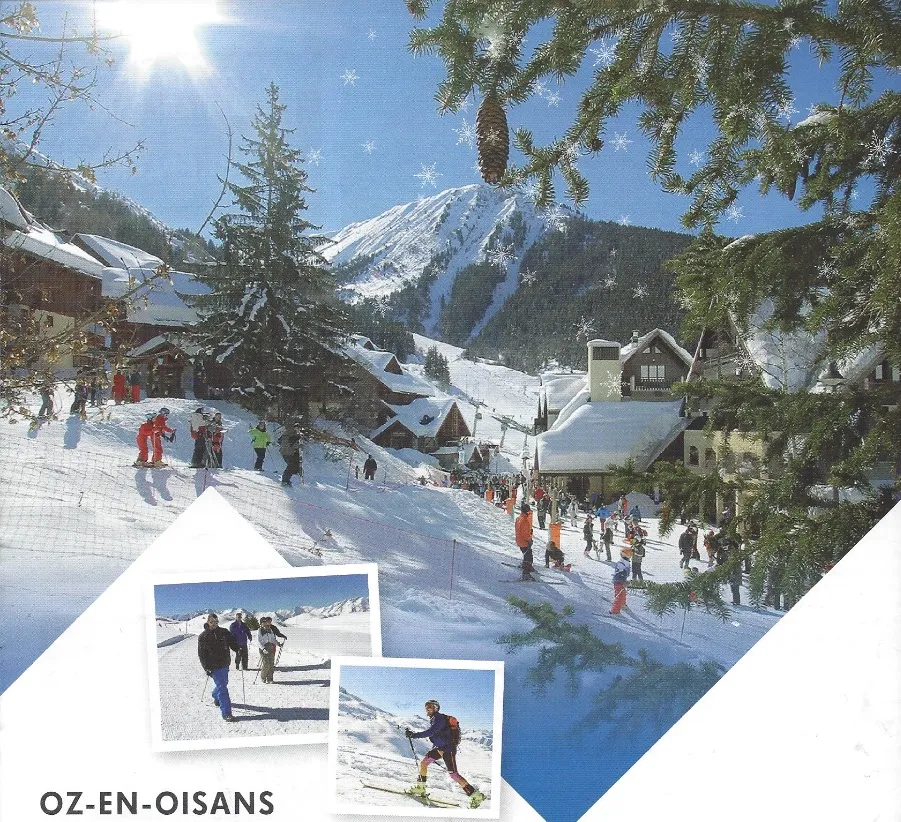
Skiing in January off-peak: the smart move for groups
Empty slopes, prices cut almost in half and a wide-open chalet: why January outside the school holidays is the best ski week of the winter for a large group free to choose its dates.
Read more Tips
Skiing during the 2030 Olympics: pick a quiet resort
In February 2030, while the host resorts of the Games are overrun, Alpe d'Huez will be running at full tilt with no events at all. The smart play: ski in peace and pop over to watch a competition for the day.
Read more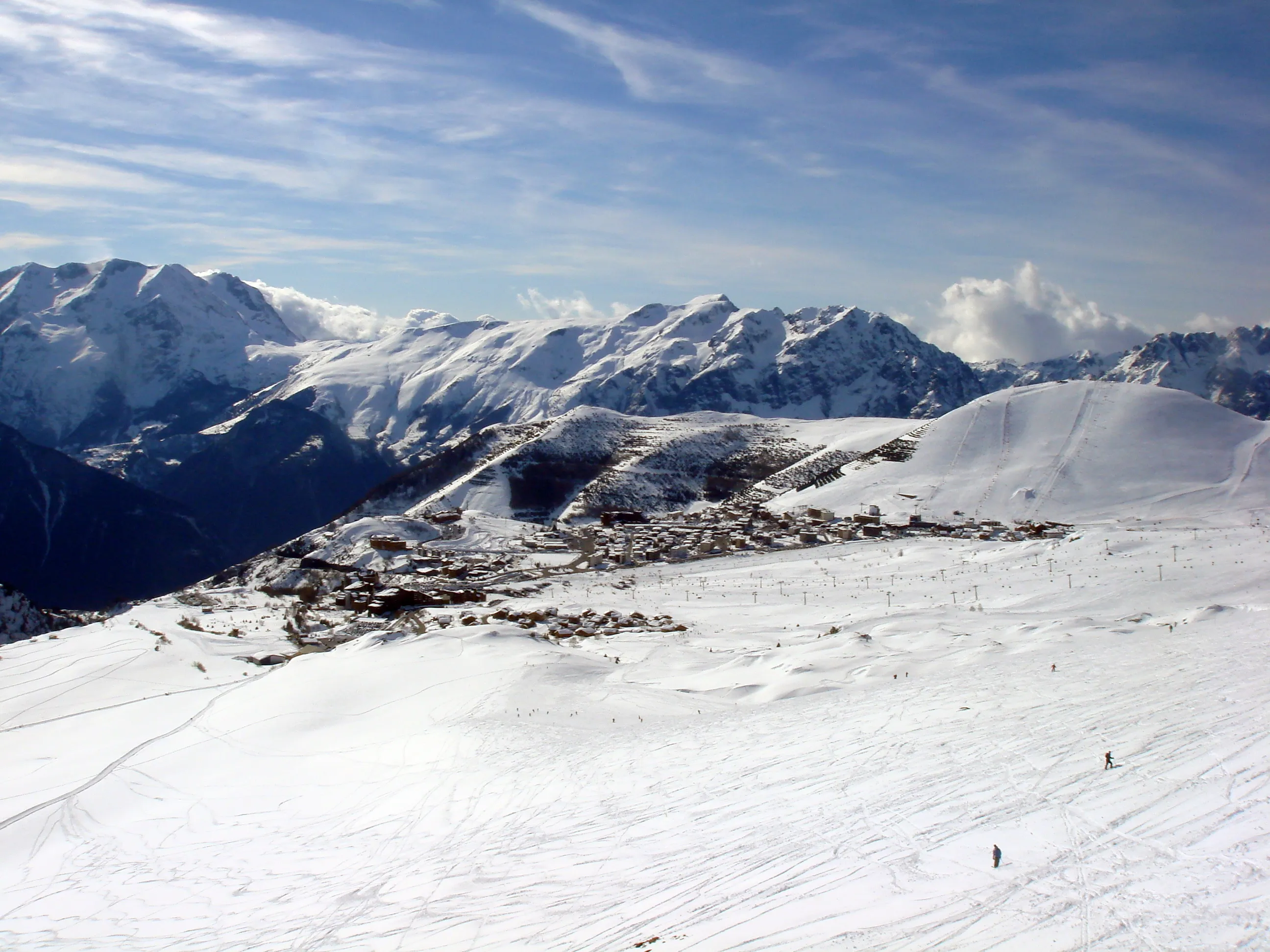 Guide
February half-term in Alpe d'Huez: book early
French zone dates, peak-season prices, crowds and clever tips to ski smart: the complete guide to the February half-term at Alpe d'Huez, seen from the chalet in Oz.
Read more