
Event · Summer
Tour de France 2026 at Alpe d'Huez: results and story
Two finishes, two winners, a legend renewed. The story and results of the 2026 Tour's double Alpe d'Huez, lived from the Oisans valley.
31 July 2026 · 10 min
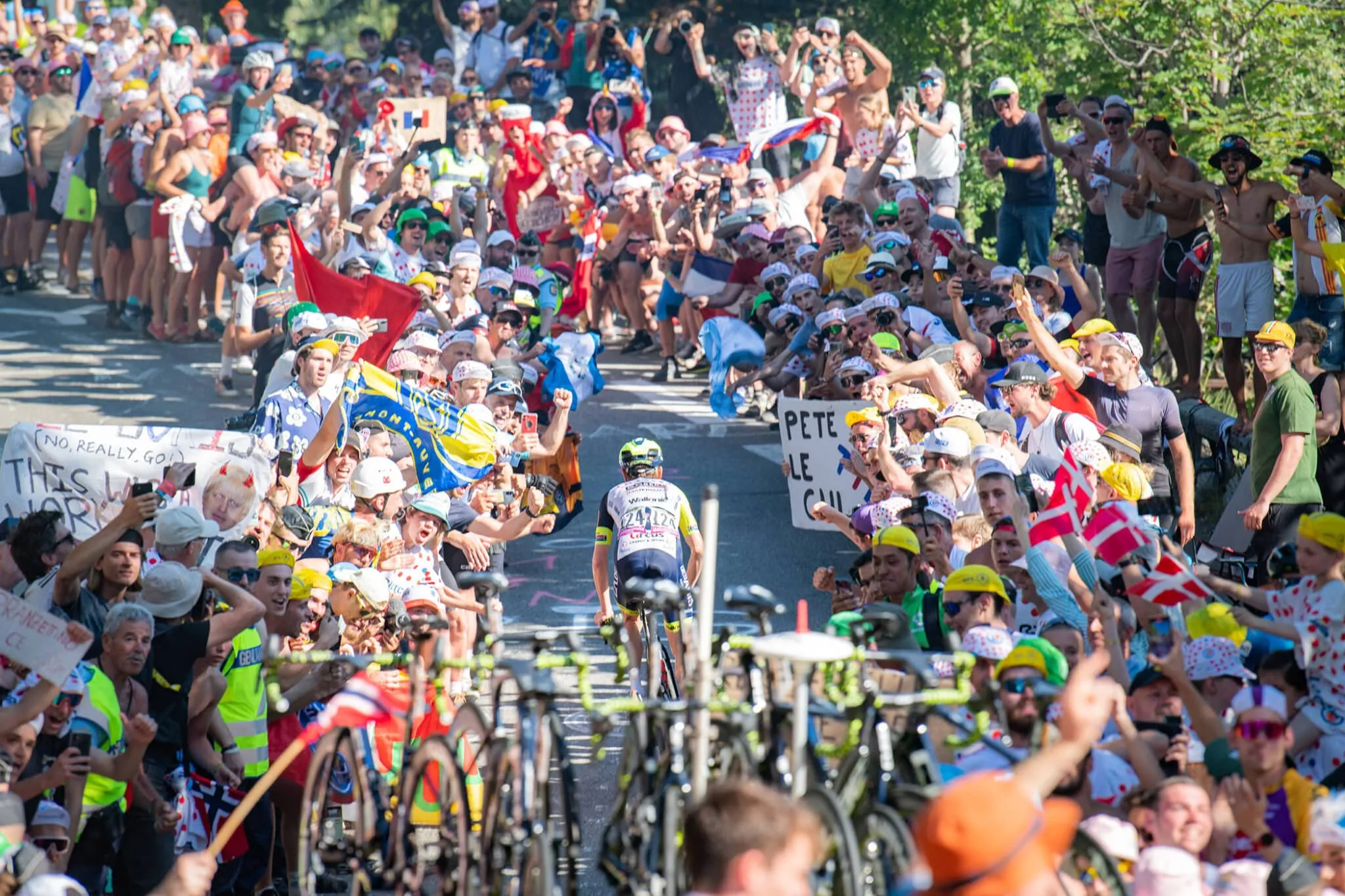
Some weekends walk straight into legend. On 24 and 25 July 2026, the Tour de France did something it had never done in more than seventy years of shared history with Alpe d’Huez: finish at the summit of the 21 hairpins two days in a row. Two stages, two scripts, two different winners — and, at the end of it all, a fifth yellow jersey for Tadej Pogačar. We watched both days unfold from the Oisans, a few kilometres from the line. Here’s the story and the results of the double Alpe d’Huez, exactly as it was written.
Friday 24 July — Pogačar strikes in yellow (stage 19)
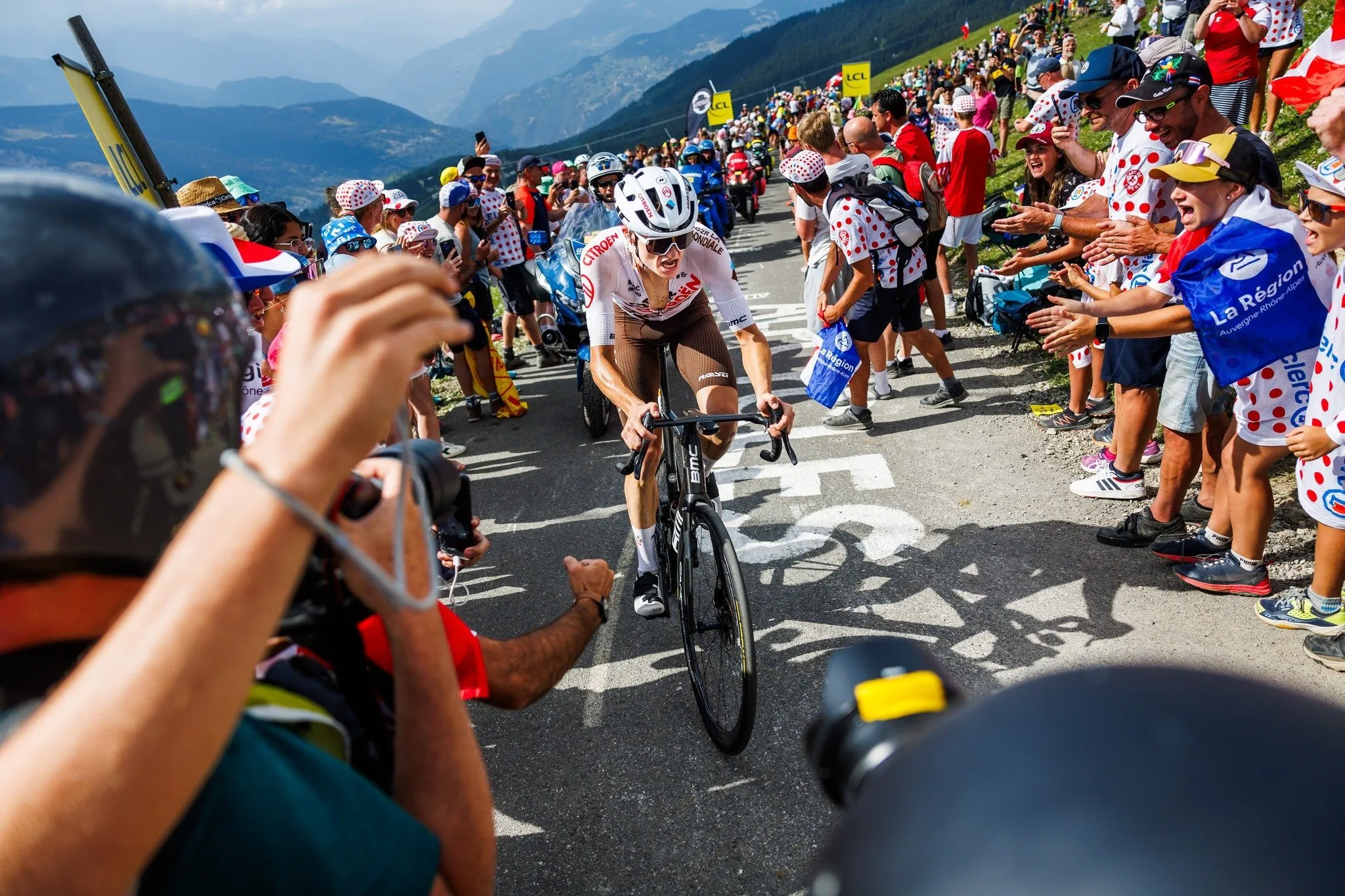
The first salvo was always going to come on the 21 hairpins. Stage 19, starting from Gap, had been designed around the classic Alpe d’Huez climb — the one that rears up sharply above the Romanche valley over 13.8 km at an average of 8.1%. By mid-afternoon the human tide was already in place: flags, camper vans lining the verges, and the famous Dutch Corner turned into an orange carnival long before the riders arrived.
In the finale, the race caught fire. Richard Carapaz and Lenny Martinez, up the road, looked destined to fight it out for the win. But Tadej Pogačar, already in yellow, launched an attack around a dozen kilometres from the top and simply kept closing the gap. He rejoined his two rivals inside the final two kilometres, then dropped them to raise his arms at the summit. Martinez took 2nd at 6 seconds, Carapaz 3rd at 9 seconds.
This win was far from a footnote: Pogačar became only the second rider to win at Alpe d’Huez wearing the yellow jersey, after Geraint Thomas in 2018. A rare feat, which stretched his overall lead beyond seven minutes and, as early as Friday evening, laid a very firm hand on the Tour.
Good to know
The 21 hairpins of Alpe d'Huez are numbered in reverse: bend 21 sits at the very bottom, bend 1 at the top. Each sign carries the name of a past stage winner — from Fausto Coppi (the first finish here in 1952) to the most recent champions. To climb it is to trace the thread of cycling history, hairpin after hairpin.
Saturday 25 July — Carapaz answers on the queen stage (stage 20)
The next day was a different beast entirely. Stage 20, 170.9 km between Le Bourg-d’Oisans and Alpe d’Huez, was the queen stage of the 2026 Tour: around 5,450 m of vertical gain to swallow before returning to the summit. On the menu, a legendary sequence — the Col de la Croix de Fer (24 km at 5.2%, hors catégorie), the Col du Télégraphe, then the Col du Galibier and its 2,642 m of altitude, the highest point of the whole Tour this year. After a long descent came the brand-new Col de Sarenne (12.8 km at 7.3%, with pitches beyond 10%) that reaches the Alpe by its wildest flank.
On terrain like that, the race was decided from the breakaway. Richard Carapaz, already third the day before, slipped up the road and made his sense of timing count. The fight for the win came down to the finale, where American Sepp Kuss, long in a position to win, crashed twice. Carapaz passed him on the descent to ride clear to the line, completing the stage in 4 h 59 min 39 s. Remco Evenepoel took 2nd at 26 seconds, with Kuss salvaging 3rd at 31 seconds.
For Carapaz, a second attacking day in a row had a special flavour: by piling up points on the passes, he locked up the polka-dot jersey as the Tour’s best climber. Ecuador had a memorable double to celebrate on the slopes of the Oisans.
The owners' tip
On those two days, the real luxury was not spending the day in traffic. From Oz, our guests headed up early on foot or by lift, took their spot in the hairpins, then came back to the chalet while tens of thousands of spectators left the summit all at once. We relived the stage in the evening around one big table, the day's results on the table and legs finally at rest.
— Célia, Isabelle, Olivier & Wilfrid
The double Alpe d’Huez in numbers
Two stages, two winners, and a general classification that barely moved under the pressure of the team in yellow. Here’s the essential to remember from a weekend unlike any other.
| Result | Stage 19 (24 Jul) | Stage 20 (25 Jul) |
|---|---|---|
| Route | Gap → Alpe d’Huez (21 hairpins) | Le Bourg-d’Oisans → Alpe d’Huez |
| Winner | Tadej Pogačar (yellow jersey) | Richard Carapaz |
| 2nd | Lenny Martinez, at 6 s | Remco Evenepoel, at 26 s |
| 3rd | Richard Carapaz, at 9 s | Sepp Kuss, at 31 s |
| Headline | 2nd rider to win at the Alpe in yellow (after Thomas, 2018) | Carapaz seals the polka-dot jersey |
At the finish in Paris on Sunday 26 July, Tadej Pogačar won his fifth Tour de France, joining Eddy Merckx, Bernard Hinault, Miguel Indurain and Jacques Anquetil at the top of the race’s all-time list. Remco Evenepoel produced the best Grand Tour of his career with 2nd place at 6 min 26 s, ahead of young Mexican Isaac del Toro, 3rd at 9 min 42 s and winner of the white jersey. Among the other classifications, Mads Pedersen took the points jersey (green) and Richard Carapaz the King of the Mountains (polka dot). Full standings are available on the official Tour de France website and in the reports from L’Équipe.
What this double finish changes for the Alpe’s legend
Alpe d’Huez never needed this to be a monument of cycling. But two consecutive summit finishes, with two different winners and two opposing profiles, added a fresh page to its story. The “classic” climb up the 21 hairpins one day, the “back-door” entrance via the Col de Sarenne the next: the Tour showed you can tell two completely different stories on the same mountain.
- An outright first: never before had the Tour finished two days in a row at the top of Alpe d'Huez.
- Two faces of the same giant: the 21 hairpins on the valley side, the Col de Sarenne on the wild flank.
- The Galibier, roof of the 2026 Tour: 2,642 m crossed in the heart of the queen stage.
- An Ecuadorian double: Carapaz, 3rd then a winner, with the polka-dot jersey to boot.
- A fifth title: Pogačar joins the very select club of five-time winners.
For the Oisans, the echo is immediate. Every passage of the Tour reignites the urge, in thousands of cyclists, to come and test themselves against the gradient. And the best place to turn that urge into a trip is a calm base camp, a few minutes from the foot of the climb.
Relive the climb: ride the 21 hairpins from Oz-en-Oisans
Watching the Tour is one kind of emotion. Riding it yourself is another — and the Oisans is the dream playground for it. Outside race days, the Alpe d’Huez climb is open to everyone: 13.8 km, 21 bends, each carrying the name of a champion. Thousands of amateur cyclists come every summer to test their legs against this gradient, at their own pace, for the thrill of reaching the summit where history is written.
From Oz-en-Oisans, the legendary passes are all within a wheel’s reach. The Croix de Fer, the Glandon, the Galibier, the Col de Sarenne or the climb up to Les Deux Alpes make up an exceptional menu for a weekend or a full week on the bike. You can plan a big “cols” outing one day, a timed ascent of the Alpe the next, and a gentle spin by the water to recover. The neighbouring resort also offers plenty of summer activities: our summer guide to Alpe d’Huez covers the hikes, lakes and family outings for anyone not on two wheels.
To plan your visit, two useful reads on the blog: our feature on the 2026 double Alpe d’Huez, written before the race, and our guide to the Grand Domaine from Oz to understand the lay of the land. For the practical side of the resort (gondolas, car parks, summer timetables), the Alpe d’Huez tourist office remains the up-to-date reference.
A chalet for the whole team, at the foot of the hairpins
Experiencing the Tour — or climbing the passes — as a group changes everything. A large chalet in the heart of Oz-en-Oisans, a stone’s throw from the lifts and the road up to the Alpe, brings up to 16 people together under one roof: a bike room to stow the machines, a big table to relive the stage in the evening, fibre internet to follow the live coverage and plan the next ride, and the calm of a village-resort to recover.
Whether you’re coming to cheer the champions, ride the 21 hairpins with your club, or simply enjoy summer in the mountains, the key is to book early: the best weeks go fast. Check our availability, send us your booking request and discover everything that summer in Oz has to offer.
Frequently asked questions
Who won stage 19 of the 2026 Tour de France at Alpe d'Huez?
Who won stage 20 of the 2026 Tour de France?
Why was this double Alpe d'Huez historic?
Who won the 2026 Tour de France overall?
How much climbing was in the 2026 queen stage?
What happened to Sepp Kuss on stage 20?
Can you climb the 21 hairpins of Alpe d'Huez yourself?
Where should you stay to experience the Tour de France at Alpe d'Huez?
Will the Tour de France return to Alpe d'Huez after 2026?
Read next
 Tips
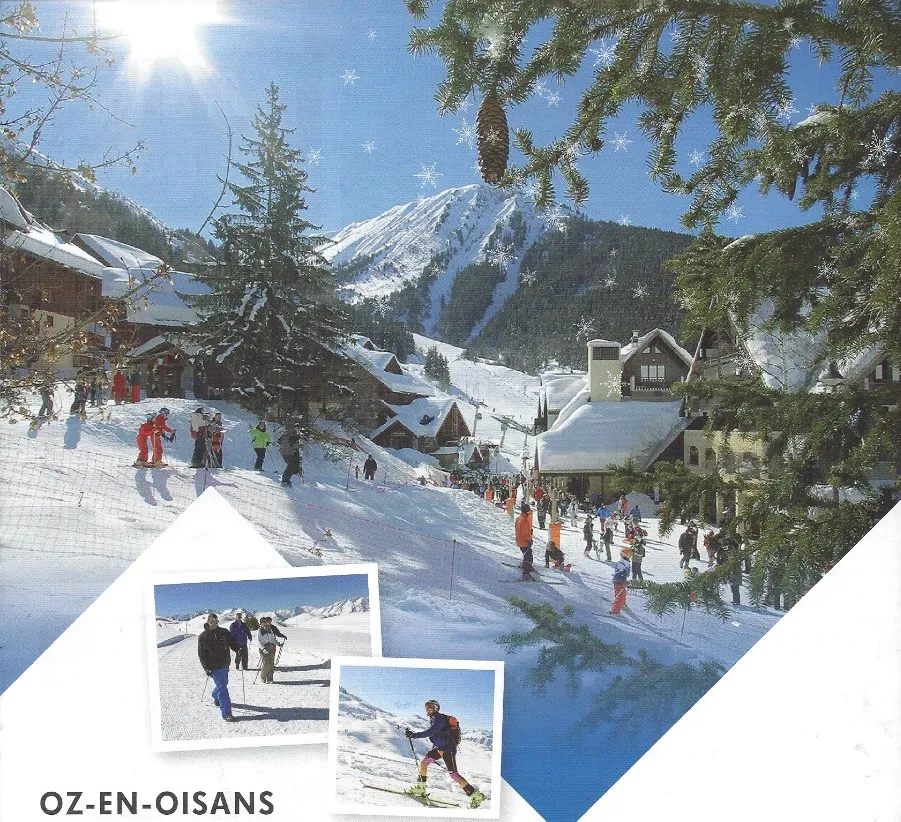
TipsSkiing in January off-peak: the smart move for groups
Empty slopes, prices cut almost in half and a wide-open chalet: why January outside the school holidays is the best ski week of the winter for a large group free to choose its dates.
Read more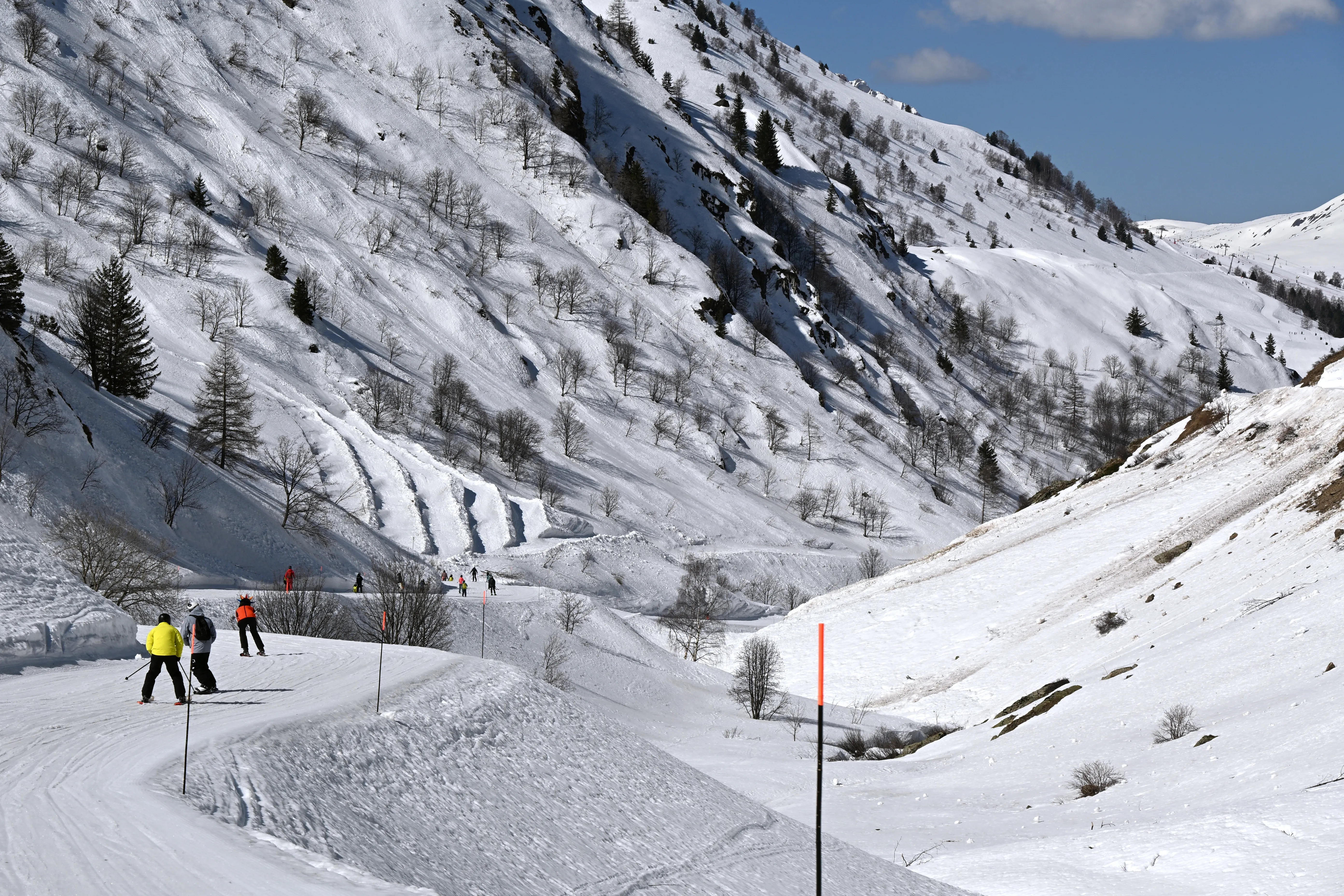 Tips
TipsSkiing during the 2030 Olympics: pick a quiet resort
In February 2030, while the host resorts of the Games are overrun, Alpe d'Huez will be running at full tilt with no events at all. The smart play: ski in peace and pop over to watch a competition for the day.
Read more Guide
GuideFebruary half-term in Alpe d'Huez: book early
French zone dates, peak-season prices, crowds and clever tips to ski smart: the complete guide to the February half-term at Alpe d'Huez, seen from the chalet in Oz.
Read more