
Event · Summer
Tour de France 2026: the double Alpe d'Huez, a historic event
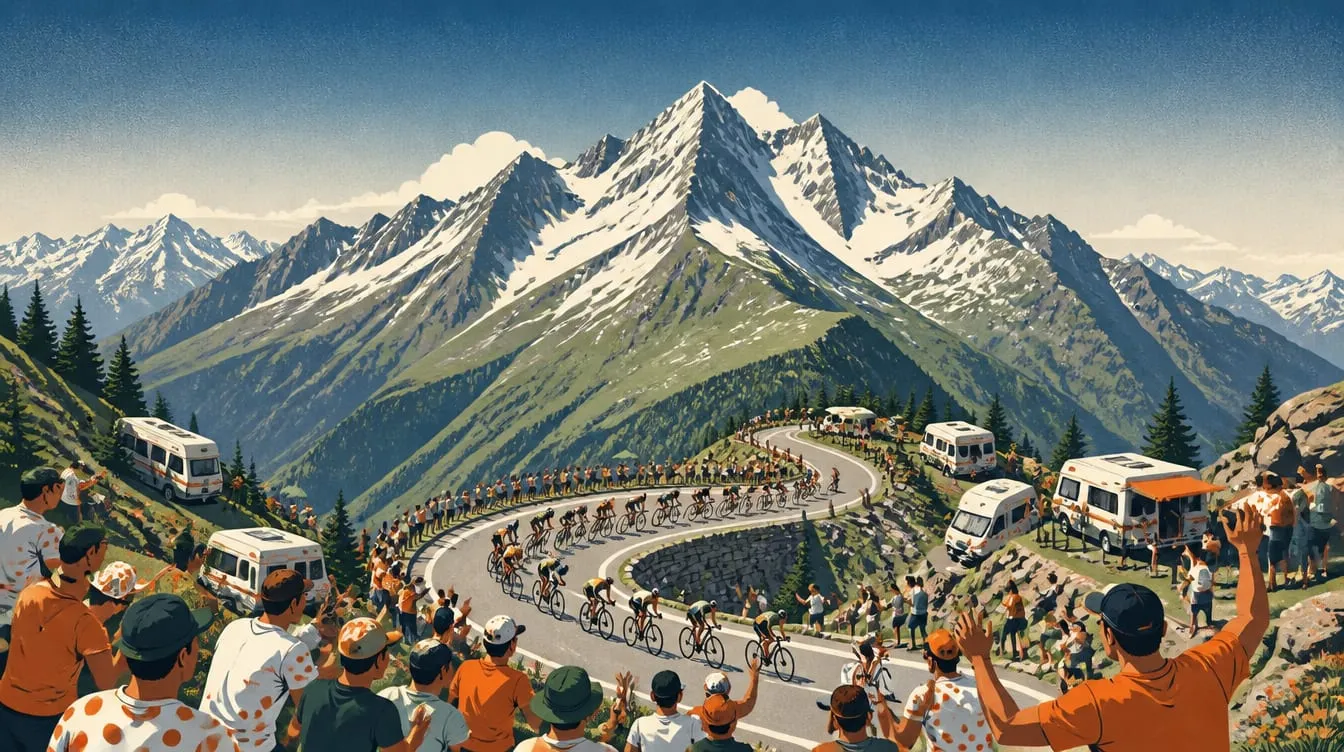
In July 2026, the Tour de France climbs Alpe d'Huez and its legendary 21 hairpins twice in a row. A look at an epic occasion to experience from Oz-en-Oisans.
2 July 2026 · 6 min
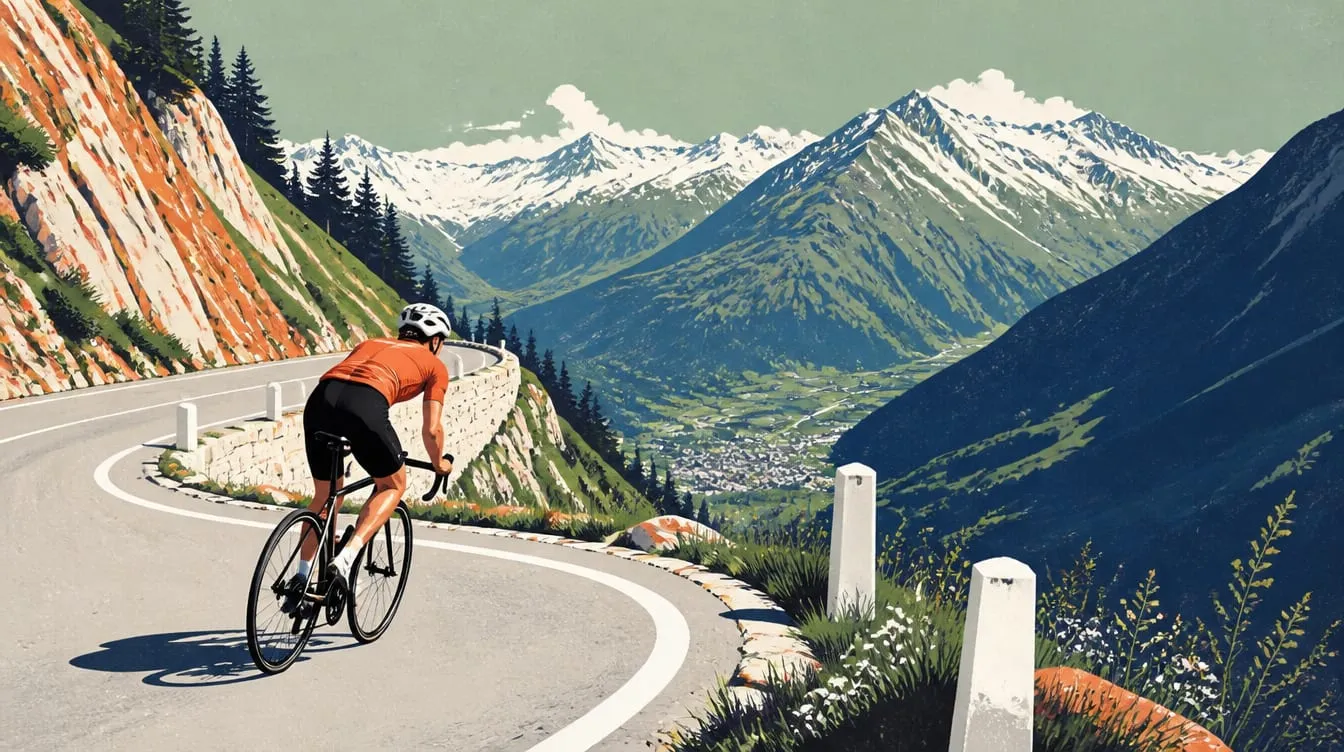
Some summers leave their mark on cycling history, and the summer of 2026 will undoubtedly be one of them. For the very first time, the Tour de France is set to climb Alpe d’Huez on two consecutive days. The 21 most famous hairpins in the world, already etched into legend, will be conquered across two back-to-back stages in the heart of the Oisans. For cycling fans, it’s a dream come true. And if you’re looking for the perfect base from which to experience it, Oz-en-Oisans and the Ozalp’ Cottage chalet put you right in the front row.
The race has happened — the results
On 24 and 25 July 2026, the double Alpe d'Huez lived up to the billing: Tadej Pogačar won stage 19 in the yellow jersey up the 21 hairpins, then Richard Carapaz took the queen stage the next day over the Galibier and the Col de Sarenne. Pogačar wrapped up his 5th Tour de France in Paris. → Read the full story and all the results.
A double finish at Alpe d’Huez: never seen before
The route imagined by the organisers of the 2026 Tour is quite simply unprecedented. Two summit finishes in a row at Alpe d’Huez, two days of battle between the best climbers on the planet, on the most mythical climb of every Grande Boucle.
The first salvo is scheduled for Friday 24 July, on stage 19, which will link Gap to Alpe d’Huez via the famous ascent of the 21 hairpins. The very next day, Saturday 25 July, stage 20 takes on the air of a grand finale: it’s the queen stage of the Tour, featuring roughly 5,600 metres of vertical gain. The riders will string together legendary passes — the Col de la Croix de Fer, the Télégraphe and the Galibier — before a finish via a completely new ascent: the Col de Sarenne, which reaches the Alpe by its wildest, most untamed flank.
Two days, two finishes at the same summit, two radically different profiles: this double Alpe d’Huez will live long in the memory, well after the peloton has left the Oisans behind. Detailed route and timings are published on the official Tour de France website.
The 21 hairpins: a monument of cycling
If Alpe d’Huez inspires such dreams, it’s because the climb itself is a true monument. The 21 hairpins stretch over 13.8 km at an average of 8.1%, a wall of tarmac that rises sharply above the Romanche valley. The gradient is relentless, sometimes exceeding 10% in the first bends, and the July heat makes the effort even more daunting.
The history of this climb and that of the Tour de France have been intimately linked since the first finish here in 1952, won by the unforgettable Fausto Coppi. Ever since, Alpe d’Huez has crowned the greatest champions and built an essential part of cycling legend. One detail that gives the ascent all its flavour: each bend bears the name of a stage winner, displayed on a sign at the roadside. Climbing the 21 hairpins means tracing the thread of history, hairpin after hairpin.
An atmosphere unlike anywhere else
No other climb generates such fervour. On the day the Tour passes through, hundreds of thousands of spectators pack the verges, turning the road into a multicoloured sea of people. The atmosphere is electric, festive, at times utterly wild.
The most iconic moment remains the passage through Dutch Corner, the famous bend at the seventh hairpin, invaded every year by an orange tide of Dutch supporters. Flags, flares, music and roaring crowds: it’s a genuine carnival escorting the riders through the final kilometres. Experiencing this atmosphere just once in a lifetime is enough to understand why Alpe d’Huez fascinates so many. In 2026, with two successive passages, the intensity will simply be doubled.
Where to watch the race from Oz-en-Oisans
Oz-en-Oisans is perfectly placed to make the most of the event. The village is directly connected to Alpe d’Huez by both the ski lifts and the road, making it a strategic launchpad for reaching the best vantage points.
A few practical tips to enjoy these two days to the full:
- Arrive very early — the access roads close several hours before the peloton comes through
- Choose the hairpins for the spectacle: close-up views and the hottest atmosphere
- Pack water, sunscreen and a hat — the July mountain sun is merciless
- Plan your movements ahead: set off on foot or by shuttle as early as possible
The owners' tip
The real luxury on those days is the calm ride home once the celebrations are over. From Oz, you head up to the Alpe for the finish, then descend quietly to the chalet while tens of thousands of people leave the summit all at once — and relive the stage around one big table.
— Célia, Isabelle, Olivier & Wilfrid
Climb the 21 hairpins yourself
Watching the Tour is magical. But the Oisans in summer is also a paradise for cyclists who want to ride the legendary slopes themselves. Outside of race days, the Alpe d’Huez climb is open to everyone: each summer, thousands of recreational cyclists come to take on the 21 hairpins and feel, at their own pace, the thrill of reaching the top.
Around Oz-en-Oisans, the legendary passes are all within a wheel’s reach: the Croix de Fer, the Glandon, the Galibier and the Deux Alpes make up an exceptional playground. And for the most ambitious, La Marmotte — one of the toughest and most prestigious cyclosportives in Europe — links the Glandon, the Télégraphe, the Galibier and Alpe d’Huez all in a single day. The perfect excuse to build a trip around a memorable sporting challenge, alongside the Tour festivities.
Experience the double Alpe d’Huez from Oz-en-Oisans
Living the double Alpe d’Huez with a group multiplies the emotion: a large chalet in the heart of Oz-en-Oisans, just a stone’s throw from the lifts and the road up to the Alpe, where you gather in the evening to relive the stage, plan the next day’s ride and share a friendly meal after a long day at the roadside.
The spots closest to the event will go fast. To experience the Tour de France 2026 and its double Alpe d’Huez in the best possible conditions, don’t wait: check availability, send us your booking request and discover everything that summer in Oz has to offer.
Frequently asked questions
When does the 2026 Tour de France reach Alpe d'Huez?
Why is the double Alpe d'Huez historic?
What is Dutch Corner?
Do the roads close on stage day?
Where is the best place to watch the stage?
Can you climb the 21 hairpins yourself?
What is La Marmotte?
Where should we stay for the Tour de France at Alpe d'Huez?
Read next
 Tips
TipsSkiing in January off-peak: the smart move for groups
Empty slopes, prices cut almost in half and a wide-open chalet: why January outside the school holidays is the best ski week of the winter for a large group free to choose its dates.
Read more Tips
TipsSkiing during the 2030 Olympics: pick a quiet resort
In February 2030, while the host resorts of the Games are overrun, Alpe d'Huez will be running at full tilt with no events at all. The smart play: ski in peace and pop over to watch a competition for the day.
Read more Guide
GuideFebruary half-term in Alpe d'Huez: book early
French zone dates, peak-season prices, crowds and clever tips to ski smart: the complete guide to the February half-term at Alpe d'Huez, seen from the chalet in Oz.
Read more